The "Safety Redundancy" Design of Solid-State Batteries: Can They Really Avoid Catching Fire or Exploding Even If They Are Punctured?
Author: David Harrington| Last updated: April 23, 2026| Reading time: About 8 minutes
What Happens When a Nail Pierces a Battery
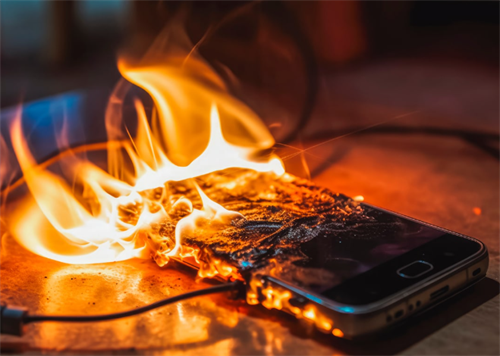
Last summer, at an SAE technical symposium in Detroit, a fire department representative played a video. A steel nail slowly pierced a battery pack from a mainstream electric vehicle. Three seconds later, smoke billowed from the puncture point. After ten seconds, flames appeared. The temperature shot past 800°C within thirty seconds. The room went quiet.
This wasn't meant to cause panic. But it's what conventional liquid-electrolyte lithium-ion batteries do when they suffer severe mechanical damage. The liquid electrolyte is a flammable organic solvent. Once the separator gets pierced, the positive and negative electrodes touch directly. This causes a short circuit. Heat builds up fast. Then comes "thermal runaway" — a self-accelerating chain reaction.
So when solid-state battery makers claim "no fire, no explosion even if pierced," many car owners naturally think: Should I wait for solid-state before buying my next EV?
There's no simple yes or no. To answer it, we need to understand what "safety redundancy" actually means. And we need to know how much of that beautiful lab data translates to the real world.
How the Four Layers of "Safety Redundancy" Work
Solid-state battery safety isn't one single technology. It's multiple layers of protection stacked together. Think of it like a building's fire safety system: good construction materials, firewalls, smoke detectors, and sprinkler systems. You need them all.
The first layer is the material itself. Conventional lithium-ion batteries use liquid electrolytes that decompose and burn around 184°C. Solid-state batteries use oxide solid electrolytes — like the ceramic separator QuantumScape uses. These stay stable above 300°C. Some materials handle 600°C without breaking down. Even if internal temperatures spike, the electrolyte itself won't fuel the fire. In June 2024, QuantumScape published test results for their 24-layer prototype cell. It survived a 300°C hot box test with no fire. The data came from the company's official blog, which included technical videos and raw test records (source: QuantumScape Corporation, "Interpreting QuantumScape's Safety Test Results," QuantumScape Blog, June 2024).
The second layer is structural isolation. The solid electrolyte acts like a physical firewall. When a nail goes in, the short circuit stays trapped in a tiny zone around the puncture. Heat can't race through liquid electrolyte to engulf the whole cell. A 2025 review from the State Key Laboratory of Fire Science at the University of Science and Technology of China, published in ACS Energy Letters, found that localized short-circuit zones in solid-state batteries typically warm up to only 65-80°C. Conventional high-nickel NMC batteries under similar conditions hit several hundred degrees (source: Cui, Y., Song, W., Liu, J., & Cong, B., "Research Progress on Thermal Runaway Mechanisms of All-Solid-State Lithium Batteries," ACS Energy Letters, 2025, 10, 11).
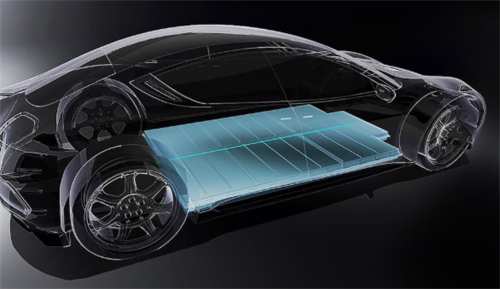
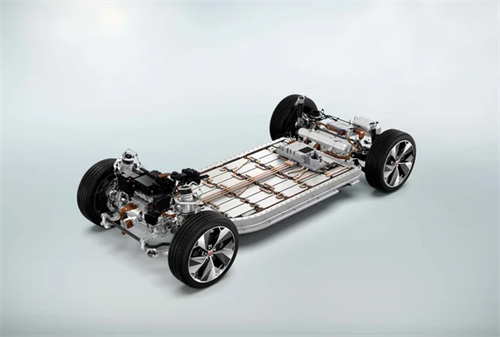
The third layer is module-level fault isolation. A battery pack contains dozens or hundreds of cells. If one fails, will the heat "infect" its neighbors? In conventional liquid battery packs, heat spreads at about 9-11°C per minute. In solid-state batteries, that drops to 0.3-0.9°C per minute. This gives the battery management system (BMS) more warning time. It can cut power or activate cooling before things get out of hand (source: PatSnap Eureka, "Comparative Analysis of Battery Thermal Runaway in Lithium-ion vs Solid-state Systems," 2025).
The fourth layer is reliable smart monitoring. In conventional batteries, liquid electrolyte is corrosive. Built-in sensors lose accuracy over time. Solid-state batteries don't have this problem. Sensors maintain high-precision monitoring throughout the entire life of the vehicle. They catch problems earlier.
These four layers together create the full picture of solid-state "safety redundancy." But there's a key caveat: most of this test data comes from prototype cells tested in controlled lab conditions.
It Passed the Lab. What About Mass Production?
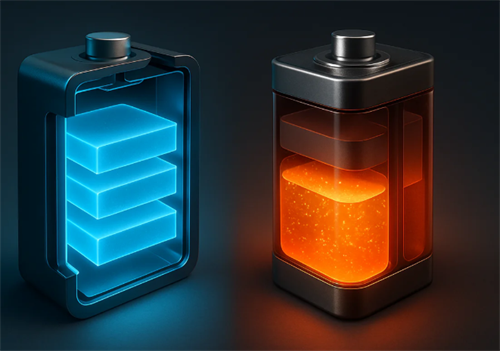
In August 2025, Taiwanese battery company ProLogium ran an interesting public comparison. They exposed three different solid electrolyte types to open flame: sulfide, polymer, and oxide. The results were stark. The oxide material stayed stable in the flame. The polymer softened and deformed. The sulfide material produced obvious irritating gas (source: ProLogium Technology, "A Hidden Hazard in Disguise of a Safety Mask? ProLogium Debunks the Solid-State Battery Safety Myth," August 2025).
This experiment reveals a fact that's often overlooked: "Solid-state battery" isn't one technology. Different approaches have very different safety profiles.
Sulfide electrolytes — used by Toyota, Samsung SDI, and Solid Power — conduct ions almost as well as liquid electrolytes. They work well in cold weather too. But at high temperatures, they can release hydrogen sulfide (H₂S). That's a toxic and flammable gas. Polymer electrolytes are flexible and self-healing. But they can still burn at high temperatures. Only oxide and certain inorganic solid electrolytes achieve true "intrinsic non-flammability."
The latest development as of April 2026: GAC Group's subsidiary Greater Bay Technology unveiled its first A-sample all-solid-state cells. Energy density reaches 260-500 Wh/kg. They passed nail penetration and thermal shock tests. This is a real breakthrough for a Chinese automaker. But A-samples are typically 18-24 months away from mass production. The industry generally expects true gigawatt-hour scale production around 2028-2030.
There's also a subtler issue. Lab "nail penetration tests" use a single, controlled puncture. Real car crashes damage batteries in messy, multiple ways — crushing, tearing, and piercing all at once, often in high heat. Even the safest oxide solid-state battery can't offer a 100% guarantee under these extreme conditions.
Plus, some solid-state batteries use lithium metal anodes. Lithium melts at just 180°C. If internal temperatures spike for some reason — say, a manufacturing defect causing an internal short — molten lithium can react more violently than conventional graphite anodes. A 2022 study in the journal Joule specifically compared thermal runaway mechanisms between solid-state and liquid lithium-ion batteries. It identified new risk dimensions with lithium metal anodes at high temperatures (source: Bates, A.M., et al., "Are solid-state batteries safer than lithium-ion batteries?" Joule, 2022, 6(4): 742-755). Not every manufacturer mentions this in their marketing.
Practical Advice for Everyday Car Owners
If you're holding a car-buying budget right now and wondering whether to wait for solid-state, here are some practical angles.
First, today's liquid lithium-ion batteries aren't that fragile. According to data from the National Highway Traffic Safety Administration (NHTSA) and multiple insurance companies, EVs catch fire 60% to 80% less often than gasoline cars. Modern liquid batteries already come with ceramic-coated separators (good to 180°C), flame-retardant electrolytes, and multi-layer battery management systems. In 2024, the failure rate for mainstream liquid lithium-ion cells was about 1 in 10 million. You're more likely to get hit by a meteorite while driving.
Second, solid-state's real advantages go beyond safety. Its energy density could double current batteries. That means easy 1,000+ km range. It supports 2-3C fast charging — 80% in 15 minutes. Cycle life reaches 5,000+ charges, enough for twenty years of driving. These practical benefits might affect your daily life more than "won't catch fire."
Third, if you're planning to replace your car in 2027-2028, solid-state is worth waiting for. The first mass-production vehicles with solid-state batteries should hit the market around then. Prices will be high at first. But safety and performance will take a real generational leap. Industry forecasts suggest solid-state batteries will capture about 50% of the EV market by 2030. Costs should drop from roughly $200/kWh today to $50-100/kWh, matching liquid batteries.
Fourth, don't ignore daily driving habits. No matter how advanced the battery tech, avoiding severe underbody impacts, following reasonable charging windows (keeping between 20-80% charge), and having professionals inspect your car after any accident — these basics matter more than any tech breakthrough. Solid-state batteries handle overcharging better. That doesn't mean you should charge to 100% every time.
An Objective Safety Ranking of the Technologies
If you care about the technical details, here's a comparison without bias:
Oxide solid electrolytes: Highest thermal stability (>600°C), intrinsically non-flammable, no gas release. Downsides: high interface resistance, poor cold-weather performance, difficult manufacturing. Key players: QuantumScape, ProLogium.
Sulfide solid electrolytes: Ion conductivity close to liquid, good cold-weather performance. But potential H₂S release at high temperatures, moisture sensitivity, poor air stability. Key players: Toyota, Samsung SDI, Solid Power.
Polymer/composite solid electrolytes: Flexible, self-healing, easy to process. But can burn at high temperatures, insufficient mechanical strength. Mostly research labs and small startups.
ProLogium's 2025 flame test gives you a simple standard. If a company advertises "won't catch fire," ask: Which electrolyte type? Only the oxide approach gives the most confident answer.
Back to the Original Question
If you drive a nail through a solid-state battery, can it really avoid fire and explosion?
Under standard lab conditions, the answer is "basically yes" — especially for high-quality oxide designs. QuantumScape's 24-layer prototype nail test, Greater Bay Technology's A-sample thermal shock test, and certifications from IEC 62133 and GB/T standards all support this.
In the real world, the answer is "risk drops dramatically, but can't hit zero." Mass production consistency, extreme multi-point damage, lithium metal anode reactions at high temperatures, and sulfide gas release — these all need ongoing attention.
The real value of solid-state batteries isn't making EVs "absolutely safe." It's moving safety from "managing risk" to "fundamentally reducing risk." It buys more time for the battery management system. It reduces hydrogen fluoride exposure danger for firefighters. It gives owners longer range and faster charging.
For consumers in 2026, don't postpone buying a car indefinitely to wait for solid-state. Today's liquid lithium-ion batteries are safe enough and reliable enough. But if you're planning to replace your car in two years, solid-state deserves serious consideration — not because it's "perfect," but because it's a meaningful step forward.
FAQ
Q1: Is it really 100% fireproof if pierced?
In standard lab nail penetration tests, oxide and high-quality sulfide solid-state batteries do avoid fire and explosion. But "100%" is a statistical concept. Mass production inconsistencies and extreme multi-point damage still carry some risk. Think of it as "fire probability drops from roughly 10% to roughly 1%."
Q2: Why do some solid-state companies say it's safe while others mention risks?
"Solid-state battery" is an umbrella term. Sulfide, oxide, and polymer approaches have very different safety profiles. Only oxide and certain inorganic materials achieve "intrinsic non-flammability." Others need extra safety engineering. ProLogium's public 2025 flame test shows this difference clearly (source: ProLogium, August 2025).
Q3: Will my liquid-battery EV become obsolete quickly?
No. Liquid lithium-ion technology is mature with well-established supply chains. It will remain a major market force through at least 2030. Solid-state is gradual replacement, not overnight revolution. NHTSA data already shows current EVs catch fire 60-80% less often than gasoline cars.
Q4: Does solid-state need special maintenance?
Theoretically more rugged than liquid batteries. But still avoid extreme heat and mechanical damage. Solid-state batteries are more sensitive to cold weather. Range loss in winter may be more noticeable due to increased interface resistance. Still follow the 80/20 charging rule.
Q5: Do firefighters need special handling for solid-state car fires?
Yes. Although fire probability drops sharply, if a lithium metal anode does reach high temperatures, it still requires Class D fire extinguishers or large amounts of cooling water. The good news: solid-state batteries don't release hydrofluoric acid (HF). That's a major improvement over liquid batteries, safer for both firefighters and passengers.
References
[1] Bates, A.M., et al. "Are solid-state batteries safer than lithium-ion batteries?" Joule, 2022, 6(4): 742-755.
[2] Cui, Y., Song, W., Liu, J., & Cong, B. "Research Progress on Thermal Runaway Mechanisms of All-Solid-State Lithium Batteries." ACS Energy Letters, 2025, 10, 11.
[3] QuantumScape Corporation. "Interpreting QuantumScape's Safety Test Results." QuantumScape Blog, June 2024.
[4] ProLogium Technology. "A Hidden Hazard in Disguise of a Safety Mask? ProLogium Debunks the Solid-State Battery Safety Myth." August 2025.
[5] PatSnap Eureka. "Comparative Analysis of Battery Thermal Runaway in Lithium-ion vs Solid-state Systems." 2025.
About the Author
David Harrington holds an M.Eng. in Automotive Engineering from the University of Warwick. He spent 14 years as a senior battery validation engineer at Ford Motor Company, overseeing abuse testing programs for production EV battery packs in North America and Europe. He now works as an independent EV safety consultant based in Stuttgart, Germany, advising automakers on compliance with UN ECE R100 and other international battery safety standards. He writes regularly for European and American automotive publications, with a focus on making complex battery technology accessible to everyday drivers.
Disclaimer
The interpretations of technical data in this article are for reference only. They do not constitute advice for vehicle purchases, investments, or technology adoption. Battery safety performance depends on specific product design, manufacturing quality, operating environment, and maintenance conditions. Solid-state battery technology remains in rapid development. Test data cited herein primarily comes from prototype cells or A-samples. Mass production products may perform differently. Readers should consult professional engineers or refer to latest official test reports before making major decisions. Company names and products mentioned are for illustrating technical approaches only and do not constitute endorsement.
Related Articles
Solid-State Batteries Are Less Likely to Catch Fire—Will Car Insurance Premiums Drop?https://zhongtaiserver.zhongtongtec.com/storage/WebsiteAdmin/view/2026-04/autotriad.com/driving/solidstate-batteries-are-less-likely-to-catch-firewill-car-insurance-premiums-drop.html
Recommended for you: