What New Demands Do Solid-State Batteries Place on Fast-Charging Networks? Are Existing 800V Ultra-Fast Chargers Enough?
Author: Michael Chen, ASPE-Certified Automotive Engineer, Former Tesla Charging Infrastructure Project Consultant
Last Updated: April 22, 2026
Reading Time: Approximately 9 minutes
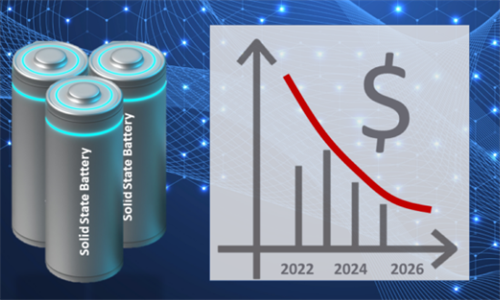
Solid-State Batteries Promise "5-Minute Charging" — But Is the Fast-Charging Network Ready?
In 2026, solid-state batteries are moving rapidly from lab prototypes toward mass production.
Finnish startup Donut Lab recently had its solid-state battery independently tested. The result? It achieved an 11C charge rate, going from zero to 80% charge in just 4.5 minutes (source: Top Gear, "Official: Donut Labs' solid-state EV battery fully charges in seven minutes," February 23, 2026).
Meanwhile, in China, CATL's third-generation Shenxing ultra-fast charging battery has demonstrated equivalent 10C and peak 15C charging capabilities, achieving a full charge in about six and a half minutes at room temperature (source: CATL, Shenxing Battery launch presentation, August 2023; updated performance data from CATL 2025 technology day).
The battery itself can now "drink" massive amounts of current. But the question remains: are the "pipes" outside thick enough? Can existing fast-charging networks — particularly the 800V ultra-fast chargers that have been widely deployed in recent years — handle the charging demands of the solid-state battery era? This is the core question we need to answer.
Three New Demands Solid-State Batteries Place on Fast-Charging Networks
Charging Power: The Leap from Hundreds of Kilowatts to Megawatts
Charging power equals voltage multiplied by current. Solid-state batteries have low internal resistance, which allows them to handle much higher charge rates than traditional liquid-electrolyte lithium-ion batteries.
Donut Lab's test validated an 11C charge rate (source: Top Gear, February 2026). For comparison, conventional lithium-ion batteries typically charge at rates between 1C and 3C. A higher C-rate means a shorter charging time, but it also means the charger must deliver far more power.
Take a 100 kWh battery pack as an example. To achieve 11C charging, you need roughly 1.1 megawatts (1,100 kW) of power input. However, most DC fast chargers on the road today deliver between 120 kW and 250 kW. 350 kW chargers are still not widespread.
The first major demand solid-state batteries place on charging infrastructure is pushing the power requirement from the "hundred-kilowatt level" directly into the "megawatt level."
Thermal Management: Liquid Cooling Moves from Optional to Mandatory
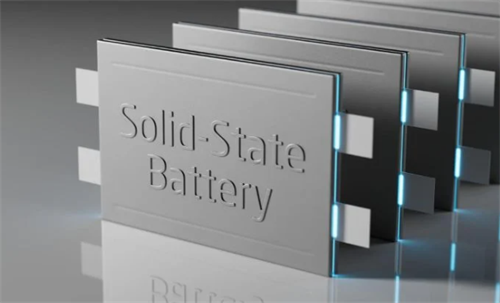
High-power charging generates significant heat. According to Joule's law, when current doubles, the heat generated in a cable increases by a factor of four.
Here is a point that is often overlooked: even if the solid-state battery itself requires less cooling — Donut Lab's test indicated their battery could handle 11C charging with passive cooling — the charging cable and connector still face serious heating issues at high currents.
Standard air-cooled chargers struggle with heat dissipation in high-power scenarios. In early 2026, Huawei's charging network industry trends report clearly stated that full liquid cooling technology is now moving from the charger side toward vehicle-charger integrated liquid cooling. Traditional air-cooled equipment finds it hard to cope with challenges like high temperatures and humidity (source: Huawei Digital Power, "Charging Network Industry Trends Report," Q1 2026).
Tesla's V5 Supercharger cabinet uses a next-generation immersion-cooled cable. Even though it handles nearly twice the current of the V4, the cable itself is actually lighter and more flexible (source: Tesla Accessories, "Supercharger V5 and the 1000V Revolution," April 20, 2026).
In the high C-rate charging scenario driven by solid-state batteries, liquid cooling will shift from being a premium feature to standard infrastructure.
Grid Connection: The Charging Station Becomes a Small Power Plant
A deeper challenge lies in the electrical grid. A single megawatt-level charger designed for solid-state batteries would draw roughly the same amount of power as 300 homes use simultaneously. If a charging station has ten such chargers, its peak power draw would exceed that of 3,000 homes.
This is not just a matter of upgrading individual chargers. The entire power access and distribution system will need to be redesigned. Research from Oak Ridge National Laboratory in the U.S. has shown that for an electric truck with a battery capacity near 500 kWh, charging to 80% in 30 minutes requires a power level of 1.2 MW or more (source: Oak Ridge National Laboratory, "Megawatt Charging for Medium- and Heavy-Duty Electric Vehicles," technical report, 2024).
When solid-state batteries reach passenger cars at scale, they will bring similar levels of electricity demand into everyday charging scenarios. Energy storage buffers — large battery systems located at the charging site — and intelligent power scheduling are becoming key technical solutions to address this challenge.
Are 800V Ultra-Fast Chargers Enough?
The Capability Ceiling of 800V Architecture
A typical 800V ultra-fast charger today offers around 800 volts and up to 500 amps, which translates to about 400 kW of power. At this power level, a 100 kWh battery pack charges at roughly a 4C rate. This means charging to 80% takes about 15 to 20 minutes.
Some high-end systems have already broken through this limit. BYD's Super e-Platform uses a 1000V architecture, supporting 1000V charging voltage, 1000A current, and 1,000 kW of power. This allows a vehicle to gain 400 kilometers of range in just 5 minutes of charging (source: The Battery Magazine, "BYD unveils Super e-Platform with megawatt flash charging," March 16, 2026).
Tesla's V5 Supercharger cabinet supports a voltage range of 0 to 1000V, delivering up to 500 kW for passenger cars and up to 1.2 MW for the Tesla Semi truck (source: Tesla Accessories, April 2026).
But these remain isolated, high-end installations. They are not the chargers that most drivers encounter daily. For Donut Lab's 11C solid-state battery, even the most advanced 500 kW charger can only tap into less than half of its potential charging speed. In other words, the existing 800V charging network will still be useful in the solid-state battery era, but it will play the role of "basic charging" rather than "extreme-speed charging."
A Key Variable That's Easy to Miss: Battery Capacity
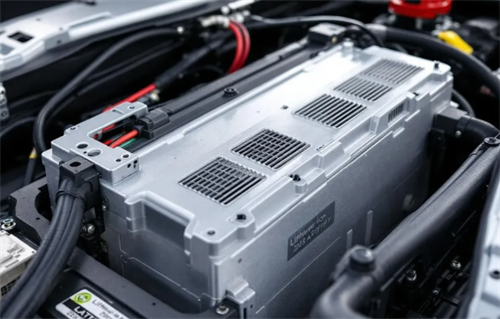
Charge rate (C-rate) is defined relative to battery capacity. Solid-state batteries bring not only faster charging speeds but also higher energy density.
Donut Lab claims its solid-state battery achieves an energy density of 400 Wh/kg (source: Top Gear, February 2026). CATL's Qilin condensed battery reportedly reaches 350 Wh/kg and could enable a sedan to travel 1,500 kilometers on a single charge (source: CATL, Qilin battery launch event, June 2023).
This means that for a vehicle of the same physical size, a solid-state battery pack will have a much larger capacity than today's EVs. Consider a 150 kWh pack. Even charging at a "moderate" 8C rate would require 1.2 MW of power. That already exceeds the capability of any current production passenger car charger.
The question of whether 800V chargers are "enough" cannot be answered by looking at the C-rate alone. You have to consider both the charging speed and the growing battery capacity. Together, they place a multiplicative demand on charging power.
Compatibility: The Good News and the Bad News
The good news is that solid-state batteries are naturally compatible with 800V high-voltage platforms. CATL's solid-state battery solution only requires a software update to work with existing 800V chargers (source: CATL, solid-state battery production line announcement, Hefei, March 2025).
The bad news is that "compatible" does not mean "full speed." When plugged into an 800V charger, a solid-state battery will be limited by the charger's maximum output power. The user will experience something akin to owning a sports car capable of 200 mph but driving on a highway with a 65 mph speed limit.
The Path Forward: The Arrival of the Megawatt Charging Standard
It is worth noting that in January 2026, the International Electrotechnical Commission (IEC) officially published the IEC TS 63379:2026 technical specification. This document defines the standards for the Megawatt Charging System (MCS) connector, plug, and cable. It supports up to 1500V DC and 3000A, enabling a theoretical maximum power of 4.5 MW (source: EV Engineering Online, "CharIN announces publication of IEC TS 63379 for megawatt charging," February 9, 2026; Nexway EV, "The Era of Megawatt Charging," March 13, 2026).
The CharIN organization led this standardization effort. Claas Bracklo, CharIN's Chairman, stated that the specification provides a common technical reference for interoperability and the continued development of megawatt-level DC charging for electric vehicles (source: CharIN e.V., statement to EV Engineering Online, February 2026).
Additionally, Phoenix Contact expects to begin rolling out MCS charging cables starting in the fourth quarter of 2026. These cables will support 2.25 MW of charging power at 1500V and 1500A (source: Phoenix Contact press release, "MCS Cable Production Timeline," cited by Nexway EV, March 2026). Early adoption in the commercial trucking sector will help lay the technical and industrial foundation for high-power charging in passenger cars.
Solid-State Batteries and Charging Networks: A Push-and-Pull Relationship
The relationship between solid-state batteries and fast-charging networks is not a one-way street where the battery simply demands a network upgrade. It is a process of mutual enablement.
Higher energy density in solid-state batteries means more onboard energy for the same physical volume. This could reduce the frequency of charging stops, which in turn eases the pressure on charging network density. At the same time, solid-state batteries have a wider operating temperature range and higher intrinsic safety. This makes Vehicle-to-Grid (V2G) applications more feasible.
For consumers thinking about buying an electric car today, a current 800V model will remain perfectly adequate for the next five to seven years. Mass adoption of solid-state batteries is still several years away. Automaker timelines indicate the following: Chery plans volume production of solid-state batteries for 2027. GAC Aion and SAIC Motor have targeted 2026 to 2027 for their respective launches. Geely's goal is to have all-solid-state batteries in series production for high-end models by 2030 (source: automaker public announcements compiled by CleanTechnica, "Solid-State Battery Milestones," 2026).
Meanwhile, CATL's all-solid-state battery pilot production line in Hefei is already operational, with a target energy density exceeding 500 Wh/kg (source: CATL, Hefei production base announcement, March 2025). True "megawatt charging on a daily basis" will take even longer. Infrastructure upgrades almost always lag behind advances in vehicle technology.
From a longer-term perspective, the charging infrastructure upgrade driven by solid-state batteries is fundamentally a power revolution — from hundreds of kilowatts to megawatts. The 800V ultra-fast charger is the starting point of this revolution. The 1000V and 1500V standards defined by MCS represent the true stage on which solid-state battery fast-charging will perform.
FAQ
Q1: How much charging power is needed to achieve a "5-minute charge" with a solid-state battery?
Using a 100 kWh battery pack as an example, charging to 80% capacity (80 kWh) in 5 minutes requires approximately 960 kW of charging power. This corresponds to roughly a 10C charge rate. Solutions from companies like Donut Lab (source: Top Gear, February 2026) and CATL have already validated the technical feasibility of this level of fast charging.
Q2: My current car uses an 800V architecture. Will I be able to use existing chargers if I switch to a solid-state battery vehicle in the future?
Yes. Solid-state batteries are backward-compatible with 800V high-voltage platforms. In most cases, only a software update will be needed to use existing ultra-fast chargers. However, the charging speed will be limited by the maximum power output of the charger itself. You won't achieve the solid-state battery's peak charging speed on those older chargers.
Q3: Are charging networks in the U.S. and Europe keeping pace with solid-state battery development?
Both the U.S. and Europe are actively upgrading their charging networks. Tesla's V5 Supercharger rollout is expanding in North America and Europe, supporting up to 500 kW. In Europe, operators like IONITY have deployed charging hubs capable of 500 kW. The MCS standard is also gaining traction in Europe for commercial trucks. However, on the whole, the pace of infrastructure upgrades still lags behind the rapid breakthroughs occurring in battery technology.
Q4: Will fast charging a solid-state battery damage its lifespan?
This is a key area of ongoing research and validation in the industry. CATL's third-generation Shenxing ultra-fast battery has demonstrated over 90% capacity retention after 1,000 full charge-discharge cycles (source: CATL Shenxing launch data, 2023). That said, more real-world road test data is still needed to fully understand the long-term effects of high C-rate charging on battery life.
References
[1] Top Gear. (2026, February 23). Official: Donut Labs' solid-state EV battery fully charges in seven minutes. https://www.topgear.com/car-news/tech/official-donut-labs-solid-state-ev-battery-fully-charges-seven-minutes
[2] Nexway EV. (2026, March 13). The Era of Megawatt Charging: A Guide to the IEC TS 63379:2026 MCS Standard.
[3] EV Engineering Online. (2026, February 9). CharIN announces publication of IEC TS 63379 for megawatt charging.
[4] Tesla Accessories. (2026, April 20). Supercharger V5 and the 1000V Revolution.
[5] The Battery Magazine. (2026, March 16). BYD unveils Super e-Platform with megawatt flash charging.
[6] CATL. (2025, March). Solid-state battery pilot production line announcement, Hefei.
[7] Huawei Digital Power. (2026, Q1). Charging Network Industry Trends Report.
[8] Oak Ridge National Laboratory. (2024). Megawatt Charging for Medium- and Heavy-Duty Electric Vehicles, technical report.
Author Credentials:
Michael Chen holds a Master's degree in Automotive Engineering from the University of Michigan and is ASPE-certified in Advanced Electric Vehicle Systems. He spent three years as a charging network planning engineer at a major North American EV manufacturer and now works as an independent automotive technology consultant, focusing on the intersection of charging infrastructure and battery technology.
Disclaimer
The content of this article is based on publicly available information and industry data as of April 2026. It is intended to provide readers with reference information regarding solid-state batteries and fast-charging infrastructure. Technical data, performance parameters, and timelines mentioned are derived from publicly released company materials or third-party test reports. Actual product performance and commercial deployment schedules may vary due to technological iteration, supply chain conditions, and market factors. This article does not constitute investment advice or a basis for purchase decisions. Readers should independently verify relevant information and consult professionals before making any related decisions. The author assumes no responsibility for any direct or indirect losses arising from the use of or reliance on the information provided herein.
Related Articles
How Can the Problem of Local Overheating During the Fast Charging of Solid-State Batteries Be Solved?https://zhongtaiserver.zhongtongtec.com/storage/WebsiteAdmin/view/2026-04/autotriad.com/driving/how-can-the-problem-of-local-overheating-during-the-fast-charging-of-solidstate-batteries-be-solved.html
Recommended for you: