Handheld Gaming PCs Have a New Bottleneck in 2026—And It Isn't Performance
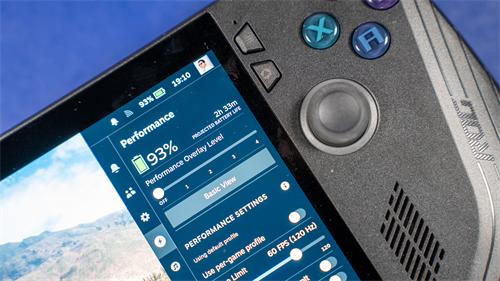
Steam Deck 2, ROG Ally X, and Legion Go 2 are already fast enough. Battery life, thermals, and software optimization are becoming the new battlegrounds.
By Sofia Laurent
Principal Computing SystemsResearcher
Last Updated: June 12, 2026
Reading Time: 11 min read
If you could bring a gamer from 2020 into 2026, they would probably assume that the handheld gaming market had solved every major problem.
Today's handhelds can run Cyberpunk 2077. They can run Black Myth: Wukong. They can even handle many AAA games that were once considered the exclusive territory of high-end gaming laptops. On paper, this should be the golden age of handheld gaming.
Yet reality tells a different story.
By 2026, the most common discussions in handheld gaming communities are no longer centered around performance.
Instead, players are talking about how to limit power consumption to extend battery life, how to adjust fan curves to reduce noise, how to fix compatibility issues after Windows updates, and which power bank is best to carry around.
This points to an interesting industry turning point: handheld hardware has become fast enough, but the overall user experience has not evolved at the same pace.
Part 1: The Performance Race Is Quietly Slowing Down
The Shift from "Can It Run?" to "Does It Feel Good to Play?"
Looking back over the past few years, the performance leap in handheld gaming has come in distinct phases.
In 2022, Steam Deck solved the question of whether portable AAA gaming was even possible. Its 15W power envelope effectively established the baseline for modern handheld gaming.
In 2024, the ROG Ally and AMD's Z1 Extreme brought high-refresh-rate gaming to handhelds, answering the question of whether games could run more smoothly.
By 2026, however, although AMD's Z2 Extreme and Intel's Lunar Lake and Arc G3 Extreme are battling fiercely on benchmark charts, the perceived benefit for users is shrinking rapidly.
This is a classic example of diminishing marginal returns. Most people can instantly notice the jump from 30 FPS to 60 FPS. But on a seven- or eight-inch screen, the difference between 70 FPS and 90 FPS in a non-competitive game is almost imperceptible.
In benchmark results published by TechPowerUp in April 2026, Intel's Arc G3 Extreme reportedly outperformed AMD's Z2 Extreme by roughly 20%. However, reviewers included an important warning: "TDP remains unknown, and low-power efficiency has historically been Intel's weakness."
That single observation highlights the core conflict of 2026:
Peak performance marketing is losing its impact. Users increasingly care about efficiency at lower power levels.
An Industry Reality: Developers No Longer Celebrate Maximum Settings
After speaking with several independent game developers, I noticed a common trend.
Optimization is no longer about squeezing every possible frame from the hardware. Instead, it is about intelligently limiting performance.
Developers have discovered that allowing a Z2 Extreme chip to run unrestricted above 28W often creates a worse experience. Fan noise becomes excessive, heat buildup triggers thermal throttling, and frame pacing becomes inconsistent.
Rather than chasing maximum output, many developers prefer locking the system around 20W, sacrificing perhaps 10% of peak frame rate in exchange for dramatically quieter operation and more stable gameplay.
Part 2: The Real Enemy Is Battery Physics
Why Can Phones Last All Day While Handhelds Cannot?
This is perhaps the biggest question ordinary consumers ask in 2026.
The answer lies in physics.
Modern flagship smartphones can indeed last an entire day, but they operate under burst workloads. Users browse social media, send messages, then lock the screen.
Handheld gaming PCs face a completely different challenge.
They are running a continuous marathon, not a sprint.
The CPU and GPU remain under sustained load, while cooling fans operate constantly to remove heat.
A Simple Comparison
Many experienced users have noticed a recurring pattern when comparing 15W and 25W operating modes.
On AMD's Z2 Extreme, increasing TDP from 15W to 25W may improve frame rates by approximately 10–15%.
But what is the cost?
According to real-world user testing of the MSI Claw in early 2026, some AAA games achieved only about one hour of battery life in maximum performance mode. Even with AI-assisted balanced modes enabled, battery life often struggled to exceed 1.5 hours.
This is a remarkably poor trade-off.
You sacrifice 50% of your mobility for a gain of perhaps 10 additional frames per second.
The Industry Secret: A Decade of Battery Stagnation
There is a widely understood reality within the industry.
Over the past decade, semiconductor manufacturing has advanced dramatically—from 14nm to 3nm and beyond.
Battery energy density has not.
Although improvements in materials such as silicon-based anodes have delivered incremental gains, lithium battery technology is approaching physical limitations.
As a result, the biggest imbalance in handheld design today is clear:
Performance growth has dramatically outpaced battery growth.
Manufacturers have increasingly relied on technologies such as silicon-anode batteries simply to keep pace, but the gains remain relatively modest.
In 2026, Acer's Predator Atlas 8 attempted to address battery anxiety by incorporating a massive 80Wh battery. The trade-off, however, was a significant increase in device weight.
Part 3: The Thermal Wall Nobody Talks About
Technology media loves discussing processors.
Teardown experts understand that cooling is often the real story.
A Handheld Is Essentially a Space Heater in Your Hands
Every semiconductor ultimately obeys the second law of thermodynamics.
Heat must go somewhere.
There are no exceptions.
By 2026, manufacturers seeking a balance between size and performance have begun experimenting with increasingly aggressive cooling solutions.
The Acer Predator Atlas 8 introduced a metal cooling fan design previously seen only in premium gaming laptops. Its 89 ultra-thin blades, each just 0.1 mm thick, were engineered to extract roughly 10% more airflow from a highly constrained space.
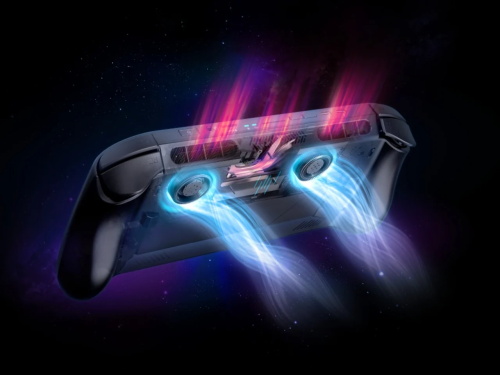
It sounds impressive.
But it introduces new engineering challenges.
1. Noise
Tiny metal blades spinning at extremely high speeds generate distinct high-frequency noise.
Many users find this more irritating than traditional low-frequency fan noise.
2. Weight
Better cooling requires larger vapor chambers and larger fans.
As a result, the Atlas 8 exceeds 810 grams.
For a handheld device, that approaches the upper limit of what many users find comfortable during extended play sessions.
A Case Study in Frustration: The Windows Ecosystem
Heat generated by hardware can be managed through engineering.
Software-generated frustration is much harder to solve.
Windows 11 handhelds often include performance modes designed to maximize hardware output. Yet many users immediately enter the BIOS after purchase to undervolt their systems or manually lock TDP limits.
Why?
Because without those adjustments, devices become hot, noisy, and dependent on wall power.
The irony is difficult to ignore.
Manufacturers work tirelessly to remove power limits and achieve higher benchmark numbers.
Users spend their time reapplying those limits in order to obtain a comfortable gaming experience.
That cycle itself represents a step backward in user experience.
Part 4: Software Is Becoming More Important Than Silicon
This is perhaps the most important battlefield of the 2026 handheld gaming war.
Software is increasingly consuming the advantages that hardware once provided.
SteamOS and the "Unfair Advantage"
Why has Valve shown no urgency in releasing Steam Deck 2?
A report from XDA in April 2026 suggested that Valve is waiting for a chip that does not yet exist.
Valve's internal standard reportedly requires a truly generational performance leap while maintaining a battery life window of roughly two to six hours.
Until such hardware arrives, Valve appears focused on something else:
Software expansion.
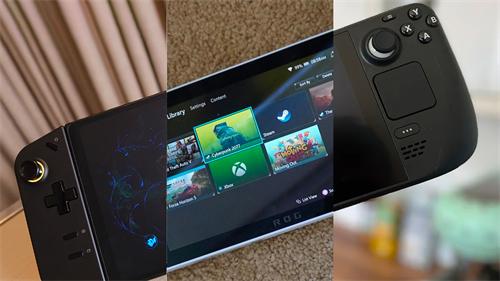
At CES 2026, Lenovo announced a version of the Legion Go 2 preloaded with SteamOS.
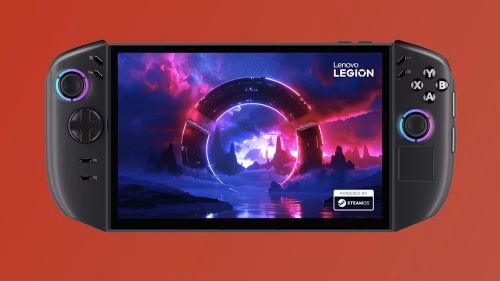
At CES 2026, Lenovo announced a version of the Legion Go 2 preloaded with SteamOS
Even more surprising, testing by Ars Technica found that on identical hardware, Linux-based SteamOS sometimes delivered frame rates 2–10 FPS higher than Windows 11.
The reason is straightforward.
Valve's Proton compatibility layer has been heavily optimized for gaming workloads, while SteamOS avoids much of the background overhead associated with Windows.
This illustrates a broader reality:
Gaming performance is no longer determined solely by transistor counts. It is increasingly shaped by how efficiently software and hardware communicate with each other.
Windows Handhelds Are Catching Up
In response to SteamOS, Microsoft spent much of 2026 trying to improve the handheld experience.
Windows 11 updates introduced features such as Full Screen Experience and Advanced Shader Delivery.
The results were impressive on paper.
In games such as Call of Duty: Black Ops 7, loading times reportedly dropped by more than 95%.
This addressed a long-standing pain point for Windows handheld users, particularly the lengthy shader compilation processes that often occurred before gameplay began.
Yet these improvements still do not completely solve Windows' underlying challenge.
Windows was never designed around controller-first interaction.
Background Defender scans, driver update prompts, and other desktop-oriented behaviors remain invisible immersion killers.
Part 5: The Hidden Cost of Chasing More FPS
Across shopping communities in 2026, the most common keywords have changed.
Instead of GPU models and benchmark scores, users increasingly ask about weight and battery life.
Two Users, Two Outcomes
I have encountered two typical types of handheld gamers.
User A
User A wanted maximum performance.
They purchased a Lunar Lake handheld marketed as the fastest device available.
Two months later, when asked about the experience, the response was simple:
"I only use the high-performance mode when plugged in. The fan gets too loud otherwise, so I usually lock it to 20W."
User B
User B chose a system equipped with a standard AMD Z2 processor rather than the Extreme version, or perhaps a SteamOS-compatible ARM-based device with a less mature ecosystem.
Peak frame rates were lower.
But because the system was quieter and could survive an entire four-hour public transit commute, User B carried it almost every day.
The conclusion is straightforward:
The value of a device is not equal to its peak performance. The value of a device is determined by how often it actually gets used.
For manufacturers, this is an uncomfortable truth.
If heat and battery life remain unresolved, the fastest handheld may ultimately become the one that spends the most time sitting unused on a shelf.
Part 6: Could ARM Change the Rules?
If x86 architecture is approaching a power-efficiency wall, could smartphone-style processors provide a solution?
Valve engineer Jeremy Selan confirmed in early 2026 that Valve is preparing a version of SteamOS for ARM architecture.
This opens the possibility of future handhelds powered by Qualcomm Snapdragon processors—or potentially even more powerful ARM-based GPUs—running native Steam games.
ARM's reduced instruction set architecture offers significantly better performance per watt than current x86 competitors.
However, a closer look at 2026 hardware reveals an uncomfortable reality.
According to comparisons published by Technical City, Qualcomm's Adreno 829 GPU operates in an entirely different performance tier than AMD's Radeon graphics found in the Ryzen Z2 Extreme.
Running modern AAA games originally developed for x86 hardware through compatibility layers still introduces significant performance overhead and compatibility concerns.
Although Windows on ARM made substantial progress throughout 2025 and 2026—including support for AVX instructions and Easy Anti-Cheat compatibility—game support remains unpredictable.
Playing games on ARM can still feel like opening a mystery box.
ARM is not the answer in 2026.
But it is a powerful signal.
The entire industry is searching for solutions beyond raw performance.
Part 7: A Practical Buying Framework for 2026
Given all of this complexity and uncertainty, here is a somewhat unconventional buying framework that can help users avoid getting trapped by specifications alone.
If You Primarily Play at Home
Focus On:
- Display quality, including OLED panels and high refresh rates.
- Fan acoustics and overall noise levels.
If battery life is not a concern, excessive fan noise will likely become more frustrating than occasional frame-rate fluctuations.
Don't Worry Too Much About:
- Maximum battery capacity.
If You Travel Frequently
Focus On:
- Device weight.
- Real-world battery life at lower TDP settings.
Ignore manufacturer video-playback claims.
Instead, search Reddit for phrases such as "15W mode real battery" and read actual user experiences.
Pay Special Attention To:
- Standby battery drain.
Windows handheld sleep modes have a reputation for turning backpacks into portable heaters.
By comparison, SteamOS's suspend-and-resume experience is often worth more than a few additional frames per second.
If You Enjoy Tinkering
Consider:
- Emerging ARM solutions.
- The broader SteamOS ecosystem.
For indie games and emulation, ARM's efficiency advantages are substantial.
The upcoming ARM version of SteamOS may eventually transform such devices into outstanding emulation platforms.
If You Only Care About FPS
A word of caution:
You may become the person who spends the most money in 2026, acquires the fastest handheld available, and eventually discovers that it functions primarily as a hand warmer and noise generator.
At that point, you will likely lock it into a lower-power mode anyway.
Conclusion: The Next Breakthrough May Not Be a Faster Chip
Looking back at the evolution of handheld gaming over the past four years, we are witnessing a return to fundamentals.
The industry once focused entirely on answering a single question:
Can it run the game?
By 2026, with the arrival of AMD's Z2 series, Intel's Lunar Lake, and Arc G3 Extreme, discussions about performance surplus have become increasingly common.
The questions now are different.
How can devices become lighter?
How can they become quieter?
How can they feel more like dedicated game consoles and less like miniature PCs that constantly require maintenance?
For real players, the defining factor of a great handheld is no longer how many frames it can produce.
Instead, the question is much simpler:
When you have ten free minutes to play a game, are you willing to take the device out of your bag and use it?
Only when the industry solves that problem will handheld gaming truly reach maturity.
Reference
1. Judge, A. (2026, January 22). Asus ROG Xbox Ally X review: First with Ryzen Z2 Extreme. Trusted Reviews. https://www.trustedreviews.com/reviews/asus-rog-xbox-ally-x
2. Choudhury, S. (2026, January 6). Intel announces Panther Lake with Arc B390 GPU and Core G3 handheld chip at CES 2026. GosuGamers. https://www.gosugamers.net/news/72553-intel-announces-panther-lake-with-arc-b390-gpu-and-core-g3-handheld-chip-at-ces-2026
3. Ward, J. (2026, March 5). Valve adds initial Steam Deck LCD hibernate support to SteamOS 3.8 preview. KitGuru. https://www.kitguru.net/gaming/james-ward/valve-steam-deck-lcd-hibernate-support-steamos-3-8-preview/
4. Thomas, J. (2026, April 11). Intel confirms Core G3 handheld chip is in development, but notebook chips are coming first. IGN. https://www.ign.com/articles/intel-core-g3-handheld-chip-development
5. Igor's Lab. (2026, May 23). Exclusive leak: Intel Panther Lake 30W equals Sony Canis 15W in gaming performance. Igor's Lab. https://www.igorslab.de/en/exclusive-leak-intel-panther-lake-30w-equals-sony-canis-15w-gaming-performance/
6. TechSpot. (2026, April 12). Lenovo Legion Go 2 review: A mixed bag of upgrades. TechSpot. https://www.techspot.com/review/2993-lenovo-legion-go-2/
7. Rock Paper Shotgun. (2026, March 20). MSI Claw A8 review: A better Z2 Extreme handheld, but battery still hurts. Rock Paper Shotgun. https://www.rockpapershotgun.com/msi-claw-a8-review
Sofia Laurent
Principal Computing Systems Researcher
Sofia Laurent specializes in personal computing systems and user-facing hardware technologies. Her research focuses on the intersection of performance, efficiency, and product design, with particular interest in how engineering decisions translate into real-world user experiences.
Recommended for you