The End of the Consumer GPU Era
What a $120 RTX 5070 Ti Markup Says About NVIDIA's New Priorities
By Lucas Reinhardt
Senior Semiconductor Analyst
Last Updated: June 13, 2026
Reading Time: 11 min read
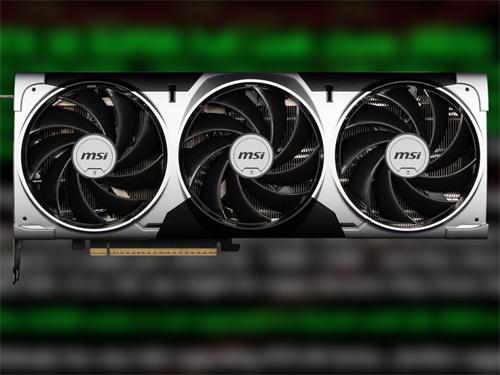
In June 2026, I searched for RTX 5070 Ti prices across three different platforms at the same time.
Newegg listed it at $869. Amazon showed $899. Best Buy had it for $849.
NVIDIA's official suggested retail price (MSRP) was still $749.
What surprised me most was not that the card cost $120 more than MSRP. What surprised me was that nobody seemed to think the price was unusual.
Newegg customer service told me, "That's the current market price."
Best Buy's product page carried no warning about shortages or price premiums.
On Amazon, buyers complained about slow shipping, not high prices.
The MSRP was still there, sitting at $749 like a price tag in a museum display case. But the gap between that number and the actual transaction price had become so large that nobody even bothered mentioning it anymore.
This was not a shortage.
All three retailers had inventory.
This was not scalping.
These were authorized sellers.
What we are seeing is something much more important:
Price itself is losing its anchoring function.
I. I Didn't Fail to Buy a GPU. I Bought a Signal.
My search process lasted roughly two weeks.
According to GPU Poet Market Report 2026, the lowest average RTX 5070 Ti price recorded in June was $869, while actual transaction prices ranged from $766 to $900.
Listings that briefly approached MSRP—for example, a sudden appearance at $766 on a particular day—typically disappeared within hours and were never restocked.
The median buyer ultimately paid $1,079, or 44% above MSRP (GPU Poet Market Report, February 2026).
I visited a local PC hardware store.
The owner was blunt.
"NVIDIA doesn't supply MSRP cards to us anymore."
He pointed at a row of graphics cards on the shelf.
"These are all priced by the AIBs themselves. Back in the day, NVIDIA rebates helped keep entry-level models close to MSRP. Those rebates are gone now."
The "rebates" he referred to were part of NVIDIA's Open Price Program (OPP).
In January 2026, German overclocking expert and Thermal Grizzly CEO Der8auer revealed through Wccftech that NVIDIA had terminated the OPP program (Der8auer via Wccftech, January 2026).
The program's basic mechanism was straightforward: NVIDIA provided rebates or discounts to AIB partners in exchange for selling selected lower-end models at MSRP.
The immediate consequence of ending OPP was simple:
MSRP GPUs "may soon become a thing of the past."
But the end of OPP is only one engine behind the $120 markup.
The second engine is deliberate capacity reduction.
In its April 2026 TSMC HPC Outlook report, Isaiah Research stated that NVIDIA had reduced wafer starts for mid-range and high-end consumer GPUs by nearly 10%, with those production allocations being "irreversibly redirected" toward higher-margin AI and data center applications (Isaiah Research TSMC HPC Outlook, April 2026).
This is not a chip shortage.
TSMC's 4nm lines are still operating at full utilization.
Rather, NVIDIA is consciously choosing to manufacture fewer consumer GPUs and more data center GPUs.
Notebookcheck reported a similar trend in February 2026, noting that supply constraints on the RTX 5070 Ti had pushed some models into the $1,000 range, representing price increases of up to 25% (Notebookcheck, February 2026).
So what is the $120 premium, really?
It is not the natural outcome of rising costs.
It is the combined effect of two structural shifts:
the withdrawal of price-support mechanisms and the reallocation of manufacturing capacity.
NVIDIA did not "raise prices."
It simply stopped maintaining an artificially low price that had already ceased to reflect reality.
II. The Same Wafer, Different Priorities
The RTX 5070 Ti carries an MSRP of $749.
It is manufactured on TSMC's 4nm process and has a die size of approximately 294 mm².
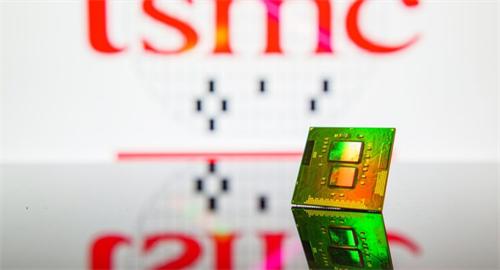
TSMC's 4nm
On the very same 4nm production lines, NVIDIA is also manufacturing Blackwell GPU dies.
Those dies are sent through CoWoS packaging lines, combined with HBM memory, and transformed into B200 server GPUs.
Selling price:
more than $40,000.
According to Silicon Analysts' Fab Explorer report from March 2026, all three of TSMC's CoWoS backend facilities—AP3, AP5, and AP6—were fully booked, with lead times extending to between 52 and 78 weeks (Silicon Analysts Fab Explorer, March 2026).
NVIDIA reportedly controls 60–70% of that capacity.
This means that even though consumer GPUs do not require CoWoS packaging, they are still competing for the same front-end wafer capacity as AI chips that do.
And in that competition, consumer GPUs have no chance of winning.
Not because they are technologically inferior.
Because the economic returns are not even in the same league.
An RTX 5070 Ti may generate gross margins of 30–40%.
A B200 may generate gross margins exceeding 80%.
Given the same 4nm wafer, the profit difference between cutting consumer GPU dies and cutting data center GPU dies is measured in orders of magnitude.
This is not because NVIDIA suddenly "doesn't care about gamers."
It is because any rational semiconductor company would make the same choice.
When TSMC's 4nm lines are fully utilized, NVIDIA's decision is no longer "How many consumer GPUs should we make?"
The real question becomes:
"How much capacity should we reserve for consumer GPUs?"
The answer depends on another question:
How much are data center customers willing to pay for the same wafer?
In April 2026, Vamsi Talks Tech, citing data from Fusion Worldwide, estimated that the five largest hyperscale cloud providers would spend between $600 billion and $630 billion in capital expenditures during 2026, with roughly 75% directed toward AI infrastructure (Vamsi Talks Tech / Fusion Worldwide, April 2026).
A large share of that spending ultimately flows into NVIDIA's data center products.
When AWS, Microsoft, and Google are buying chips priced between $40,000 and $100,000 each, products built around a $749 pricing model naturally become consumers of residual capacity.
This is not unique to NVIDIA.
It is a universal consequence of scarcity at advanced process nodes.
III. This Is Not NVIDIA's Story. It Is the Semiconductor Industry's Story.
The $120 RTX 5070 Ti markup is simply the first time ordinary consumers are directly feeling a resource reallocation that is occurring across the entire semiconductor industry.
And it extends far beyond NVIDIA.
TSMC's advanced-node capacity—4nm, 3nm, and 2nm—is effectively booked through 2027.
Apple, AMD, Qualcomm, and NVIDIA are competing for the same wafers.
Consumer products—whether smartphone SoCs or gaming GPUs—are increasingly competing against data center chips for manufacturing resources.
CoWoS packaging constraints affect AMD as well.
AMD's MI300X series also requires CoWoS and advanced-node capacity.
Its consumer GPUs, including products such as the RX 9070 XT, face similar supply pressures.
Price increases have been smaller than those seen in NVIDIA's ecosystem, but AMD's traditional value advantage is gradually narrowing.
HBM memory shortages extend beyond GPUs.
AI training depends heavily on HBM3E.
Capacity from SK Hynix, Samsung, and Micron is effectively committed through 2027.
Consumer GPUs use GDDR7 rather than HBM, so they are not competing directly.
Yet GDDR7 supply is still indirectly affected by the broader concentration of investment around AI infrastructure.
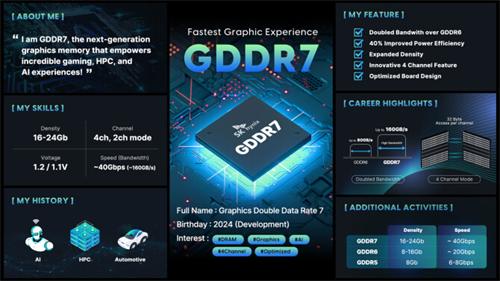
GDDR7 Memory
Electricity is another underappreciated bottleneck.
The power requirements of large-scale AI clusters are beginning to reshape global electricity allocation.
In some U.S. states, substantial portions of future power capacity have already been reserved for AI data centers.
Consumers may ultimately feel the effects through higher electricity costs.
Capital expenditure allocation may be the most profound shift of all.
Global semiconductor investment is moving from diversification toward AI concentration.
Between 2024 and 2026, more than 60% of new fab-related investment flowed toward AI-oriented capacity.
Capacity expansion for consumer electronics has largely stagnated.
The $120 premium on an RTX 5070 Ti is merely one visible symptom of a much larger structural transformation.
IV. NVIDIA's Priority Stack: Consumer GPUs Sit at the Bottom
If NVIDIA's product portfolio were ranked by strategic importance, it would roughly look like this:
The first layer consists of training GPUs, including B200, Blackwell, and the upcoming Rubin platform.
These are NVIDIA's most profitable products and are sold directly to hyperscale cloud providers and AI laboratories.
The second layer consists of cloud inference accelerators serving customers such as AWS, Azure, and Google Cloud.
The third layer consists of enterprise AI services, including DGX Cloud and various software offerings.
The fourth layer consists of workstation GPUs, such as the RTX Pro family, serving professional creators and engineering customers.
The fifth layer—the bottom of the stack—is consumer gaming GPUs under the GeForce brand.
This hierarchy is not a moral choice.
It is a mathematical consequence of market structure.
When a company's top customer groups are purchasing chips at prices ranging from $40,000 to $100,000, products designed around a $749 price point naturally become consumers of whatever capacity remains.
That does not necessarily mean NVIDIA is abandoning gamers.
A more accurate description would be that NVIDIA is transforming them.
GeForce NOW provides a useful example.
Instead of purchasing a $749 graphics card, players can subscribe to a service for around $20 per month and run games on NVIDIA's hardware in the cloud.
The chips inside those data centers are still NVIDIA chips.
The difference is that they generate far higher margins than individual consumer graphics cards.
This is not abandonment.
It is an upgrade.
At least from NVIDIA's perspective.
V. The Real Change Is Not Price. It Is Priority.
For anyone still considering an RTX 5070 Ti, several practical observations are worth keeping in mind.
First, MSRP is no longer a reliable anchor.
The traditional strategy of "waiting for prices to fall" is unlikely to work during this product cycle.
What we are witnessing is not a temporary supply disruption.
It is a structural reprioritization.
Second, the window for exceptional deals is extremely narrow.
According to GPU Poet Market Report 2026, listings near MSRP typically appear only once and are rarely restocked.
The median buyer paid $1,079, more than $300 above the best observed deals (GPU Poet Market Report, February 2026).
In practical terms, hesitation may cost hundreds of dollars.
Third, alternative options are changing as well.
AMD's RX 9070 XT faces its own supply pressures.
Used RTX 3080 cards can be found for roughly $240, but they trail the RTX 5070 Ti significantly in both power efficiency and overall performance.
For the PC hardware industry, the implications for AIB partners are deeper.
Without NVIDIA's OPP subsidies, profit margins on entry-level products become increasingly compressed.
Some partners may choose to exit the low-end segment altogether or focus on premium differentiated offerings.
Over time, the role of the AIB may gradually evolve from "graphics card manufacturer" into "hardware supplier for cloud infrastructure."
For the semiconductor supply chain, the transformation of consumer GPUs into residual-capacity products marks the end of an old operating model.
In the past, NVIDIA could use consumer GPUs to absorb unused manufacturing capacity during periods of weak data center demand.
Consumer GPUs acted as a balancing mechanism.
Today, data center demand rarely experiences meaningful downturns.
Consumer GPUs no longer fill idle capacity.
Instead, they are increasingly produced only when capacity remains available.
They are no longer a priority.
They are the remainder.
VI. Conclusion
The consumer GPU era did not end with an announcement.
It ended when price stopped functioning as a promise.
RTX 5070 Ti cards will continue selling in the millions.
The GeForce brand will continue to exist for many years.
But the next time you see an MSRP attached to a graphics card, it is worth remembering one thing:
That number is no longer NVIDIA's promise to consumers.
It is merely a market reference point.
The real price is written elsewhere.
It is written in TSMC's wafer allocation schedules.
It is written in hyperscale cloud procurement contracts.
It is written in the direction of global semiconductor capital expenditure.
The question is:
Once you realize that, are you still willing to pay a premium for what has become the remainder?
References
1. GPU Poet. (2026). RTX 5070 Ti price tracking data. GPU Poet. https://gpupoet.com
2. Der8auer. (2026, January). NVIDIA terminates Open Price Program (OPP) for AIB partners. Wccftech. https://wccftech.com
3. Notebookcheck. (2026, February). RTX 5070 Ti supply crunch drives prices up 25% to $1,000 range. Notebookcheck. https://notebookcheck.net
4. KGI Securities. (2025). TSMC CoWoS capacity and client allocation analysis [Research Report]. KGI Securities.
5. IDC. (2026). AI infrastructure spending tracker: Global forecast and market analysis [Industry Report]. International Data Corporation.
6. Fortune. (2026, April). Hyperscaler capex to top $700 billion in 2026. Fortune. https://fortune.com
7. Meta Platforms, Inc. (2026). Meta Q1 2026 earnings report: Full-year capital expenditure guidance raised to $125-145 billion [Quarterly Earnings]. Meta Investor Relations. https://investor.fb.com
Lucas Reinhardt
Senior Semiconductor Analyst
Lucas Reinhardt is a semiconductor industry analyst focused on advanced manufacturing, memory technologies, and AI infrastructure. His work explores how supply chains, fabrication technologies, and capital investment decisions reshape the global computing landscape. Before becoming an independent analyst, he spent years covering the European semiconductor ecosystem and industrial technology markets.
Recommended for you