Is the Self-Discharge Rate of Solid-State Batteries Lower Than Traditional Batteries During Long-Term Parking?
Author:Ethan Morrow | Last updated: April 23, 2026 | Reading time: ~10 minutes
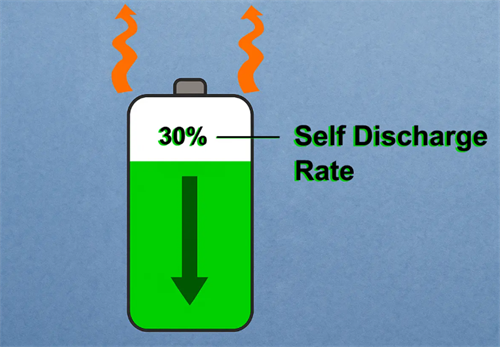
Self-discharge rate—sounds technical, but it simply refers to how fast a battery loses its charge when it's just sitting there unused.
For conventional lithium-ion batteries, the industry benchmark is around 1% to 2% per month at room temperature (25°C) (source: Pistoia, G., Lithium-Ion Batteries: Advances and Applications, Elsevier, 2014 — widely cited industry reference). Put another way: if your EV has a 60 kWh pack and you park it for 30 days, you can expect to lose about 0.6 to 1.2 kWh of energy. That translates to roughly three to six miles of range.
For daily commuters, this loss is barely noticeable. But if the car sits for months, or if winter weather already has you watching the range gauge closely, that small drain starts to matter.
Solid-state batteries have been tested repeatedly by researchers and automakers over the past few years, and their self-discharge behavior is one of the things under scrutiny. In principle, replacing the liquid electrolyte with a solid one reduces the slow side reactions inside the cell—so there's a theoretical foundation for lower self-discharge.
But theory is one thing; how actual cells perform is what this article aims to unpack.
1. Two Kinds of Self-Discharge: What's Actually Different Between Liquid and Solid-State Batteries
Before diving in, it helps to separate two kinds of capacity loss: reversible self-discharge and irreversible calendar aging. The terms are a mouthful, but the idea isn't complicated.
In a traditional lithium-ion cell at full charge, the graphite anode and the liquid electrolyte are always engaged in tiny, ongoing chemical reactions. Solvent molecules in the electrolyte get reduced at the anode surface, and metal ions from the cathode slowly dissolve and redeposit—all of which cause permanent capacity loss.
At the same time, there's a process called reversible self-discharge: lithium ions migrate out of the electrode materials back into the electrolyte. This doesn't damage the electrodes, but it lowers the voltage and temporarily reduces the usable capacity. That common experience—"I just charged it to full and overnight it dropped to 95%"—is mostly voltage relaxation, not actual leakage.
When a solid-state battery swaps out the liquid electrolyte for a solid one, the picture changes.
Take a sulfide-based solid electrolyte like Li₆PS₅Cl as an example. Its ability to conduct lithium ions at room temperature is already on par with liquid electrolytes, but its ability to conduct electrons is orders of magnitude lower. It's this extremely low electronic conductivity that sets a very low floor for self-discharge. Even a theoretically perfect solid electrolyte still has a tiny trickle of electrons that "leak" through, creating a minuscule internal discharge current—but that current is far smaller than the side-reaction currents in a liquid system.
In 2025, researchers from the University of Giessen in Germany and the University of Waterloo in Canada collaborated on a study tracking calendar aging in solid-state batteries, published in the Journal of The Electrochemical Society. They built cells using Li₆PS₅Cl solid electrolyte and stored them at room temperature at 50% state of charge for eight months.
Their finding: reversible self-discharge was the main contributor to capacity fade during that period. Irreversible side-reaction damage was barely observed over the entire test (source: Deng, R., Das, R., Wu, R., et al., "Understanding Calendar Aging of Thiophosphate-Based Solid-State Batteries," Journal of The Electrochemical Society, 2025). That's quite different from the old rule of thumb for conventional lithium batteries, where side reactions dominate aging.

2. A Test Case: How Much Charge Does It Lose After 10 Days?
Now let's look at an actual test.
In March 2026, a Finnish solid-state battery startup called Donut Lab commissioned VTT Technical Research Centre of Finland to independently test one of their cells (source: Electrek, "Donut Lab Solid-State Battery Retains 97.7% Charge After 10 Days in Third Test," March 2026; BatteryIndustry.net, "Donut Lab Releases Findings on Battery Charge Retention," March 2026).
The procedure was straightforward: take a cell rated at 26 Ah, charge it to about half capacity (exactly 13.335 Ah), and then just let it sit at room temperature (22–28°C) for 240 hours—ten full days. Voltage was recorded every ten seconds during that time.
After ten days, the cell was fully discharged, and the measured remaining capacity came out to 13.029 Ah. That works out to a capacity retention of 97.7%, meaning a loss of 2.3%.
At first glance, someone might think: 2.3% over ten days—if that were a linear trend, it would be around 7% per month, which is worse than the 1–2% monthly figure for conventional lithium cells.
But don't jump to conclusions. Self-discharge isn't linear.
The voltage curve published by VTT reveals more nuance: in the first ten seconds, voltage dropped by 60 mV. In the first hour, it dropped by 103 mV. Almost all of that is voltage relaxation—the battery settling down from its charged state—not genuine self-discharge.
The key part comes later: from hour 10 to hour 240, a span of 230 hours, the voltage drifted by only an additional 12 mV. The curve basically flattened out.
In other words, once the cell reached a steady state, the self-discharge rate was extremely low. VTT specifically noted in its conclusion that the test did not cause any visible damage to the cell. That suggests the permanent loss embedded in that 2.3% figure is minimal.
Of course, the test has its limits. Ten days is enough to see that the steady-state self-discharge is slow, but to understand what happens over three months or six months, longer test data will be needed. Still, the current data supports the idea that once a solid-state cell settles down, self-discharge is well under control.
3. Key Factors That Affect Self-Discharge: Temperature, State of Charge, and Material Choice
Self-discharge in a solid-state battery isn't a fixed number—it varies with a few conditions.
Temperature is the most important external factor.
The eight-month calendar aging study mentioned earlier offers concrete numbers: at 25°C, capacity faded by 4.1% over the test period. At 60°C, the fade increased to 7.0% (source: Deng et al., 2025). Interestingly, even at 60°C, the loss was still dominated by reversible self-discharge rather than a sudden surge in side reactions.
But that doesn't mean high temperatures are harmless. Some research warns that sulfide solid electrolytes may face chemical stability issues above 70°C (source: Wu, E. A., et al., "Calendar Aging of Lithium Metal Solid-State Batteries: Influence of Temperature and State of Charge," Advanced Energy Materials, 2025). On a summer day, the interior of a parked car easily exceeds 60°C. That risk is worth taking seriously.
State of charge matters too.
When the battery is fully charged, the cathode is highly oxidizing and the anode potential is low. The chemical "urge" for reactions is stronger, so self-discharge tends to be faster. Conversely, when the state of charge is too low, self-discharge slows down, but the structural stability of the electrode materials can degrade, potentially leading to permanent damage over time.
The middle range of 40% to 60% is widely accepted as the battery's comfort zone—self-discharge is manageable, and structural risks are minimized (source: Wu et al., 2025).
Material choice adds complexity.
Solid electrolytes fall into three main categories: sulfides, oxides, and polymers. Sulfides offer the best lithium-ion conductivity but are more sensitive to moisture and heat. Oxides are chemically more stable, though the interface between electrolyte and electrode remains an engineering challenge. Polymers have lower conductivity, which might translate to different self-discharge characteristics.
Semi-solid-state batteries, a transitional design, still retain a small amount of liquid electrolyte, so their self-discharge behavior sits somewhere between conventional liquid cells and fully solid-state cells.
Right now, there's no unified industry standard for self-discharge across different manufacturers and material routes. Consumers looking at claims should focus on test reports for specific products rather than lumping all "solid-state batteries" together.
4. Practical Advice for Long-Term Parking—Works for Any Battery Type
Whether you drive today's lithium EV or a future solid-state one, the principles for long-term parking are fairly consistent.
For a week or less, no special action is needed. Before you leave, turn off Sentry Mode, cabin preconditioning, and any other loads that stay on when the car is off. Those features often drain far more energy than the battery's own self-discharge, so they're the more important thing to address.
For one to four weeks, set the state of charge to around 50% before you park. Choose a spot out of direct sunlight and away from big temperature swings. If the charge drops below 25% when you return, use a slow charger to bring it back above 50% before resuming normal driving. Slow charging gives the battery management system more time to balance the cells, reducing the risk of localized overvoltage during the first charge after a long sit.
For over a month, keeping the charge between 40% and 60% is the safest bet. Ideally, check the level once a month, and if it dips below 30%, top it back up to 50%. If possible, have someone do a shallow charge-discharge cycle—say, charge from 50% to 60%, then discharge back to 50%. That does more to keep electrode materials active than simply topping up the charge.
Back to the Original Question
Is the self-discharge rate of solid-state batteries lower than that of traditional batteries during long-term parking?
From a fundamental standpoint, the answer should be yes. Replacing the liquid electrolyte with a solid one cuts down on side reactions at the source. The reversible self-discharge caused by residual electronic conductivity is orders of magnitude lower than the irreversible aging processes in conventional cells.
The available test data supports that theory. In Donut Lab's 10-day test, the voltage drift in the steady-state phase was minuscule (source: Electrek, March 2026). In the eight-month study, reversible self-discharge—not side reactions—drove the capacity changes (source: Deng et al., 2025).
But two caveats are necessary.
First, solid-state batteries are not a single product category. Different material systems and manufacturing approaches will produce different self-discharge behaviors. One blanket statement can't cover them all.
Second, self-discharge rate isn't the headline advantage of solid-state batteries. The major gains are in safety (far lower fire risk), energy density (longer range in the same package), and cycle life (more years of service). Those are the factors pushing the technology toward production.
In 2026, solid-state batteries are moving from the lab to the assembly line. Geely has announced plans for small-scale mass production of all-solid-state batteries by 2027, starting with a fleet of 1,000 vehicles for demonstration (source: Geely Auto Group, "Smart Geely 2025" strategy announcement; updated at Auto China 2026 press conference, April 2026).
Karma Automotive and Factorial have launched the first U.S. solid-state battery production project aimed at passenger cars, targeting deliveries by late 2027 (source: Karma Automotive press release, "Karma and Factorial Launch U.S. Solid-State Battery Production Project," February 2026).
MG plans to bring compact EVs with semi-solid-state batteries to the European market within 2026 (source: MG Motor Europe press release, "MG to Launch Semi-Solid-State Battery Compact EV in Europe," March 2026).
As these vehicles hit the road, longer and richer real-world data will give us a more solid answer to the question posed in this article.
For consumers, whether you buy a lithium EV now or wait for a solid-state model, good parking habits will always pay off. Good habits tend to age better than even the best batteries.
FAQ
Q1: Do solid-state batteries have zero self-discharge?
No. They still have an extremely small internal discharge current caused by the tiny residual electronic conductivity of the solid electrolyte. This is reversible self-discharge and typically does not cause permanent capacity loss (source: Deng et al., 2025).
Q2: What's the best state of charge for parking an EV for three months?
Set it to around 50% before you leave. Check the level once a month during storage, and if it drops below 30%, top it up to 50%. Letting the battery sit below 20% for long periods does more harm than parking it at full charge.
Q3: Does parking in summer heat affect solid-state batteries?
Solid-state batteries are more heat-tolerant than conventional ones, but prolonged exposure to high temperatures still accelerates capacity fade. One study showed capacity loss at 60°C over eight months was about 70% higher than at 25°C (source: Deng et al., 2025). Parking in a garage or shaded spot is a good idea.
Q4: Should I wait for solid-state batteries before buying an EV?
Solid-state batteries offer clear advantages in safety and range, but wide availability in mainstream family cars is likely a few years away—perhaps around 2030. Today's lithium EVs are already mature and reliable. If you need a car now, there's no reason to wait. Self-discharge rate shouldn't be a deciding factor.
References
[1] Pistoia, G. (2014). Lithium-Ion Batteries: Advances and Applications. Elsevier — widely cited industry reference for conventional lithium-ion self-discharge rates (~1–2% per month at 25°C).
[2] Deng, R., Das, R., Wu, R., et al. (2025). Understanding Calendar Aging of Thiophosphate-Based Solid-State Batteries. Journal of The Electrochemical Society.
[3] Wu, E. A., et al. (2025). Calendar Aging of Lithium Metal Solid-State Batteries: Influence of Temperature and State of Charge. Advanced Energy Materials.
[4] Electrek. (2026, March). Donut Lab solid-state battery retains 97.7% charge after 10 days in third test.
[5] BatteryIndustry.net. (2026, March). Donut Lab releases findings on battery charge retention.
[6] Geely Auto Group. (2023, September). Smart Geely 2025 strategy announcement; updated timeline at Auto China 2026 press conference, April 2026.
[7] Karma Automotive. (2026, February). Karma and Factorial Launch U.S. Solid-State Battery Production Project [Press release].
[8] MG Motor Europe. (2026, March). MG to Launch Semi-Solid-State Battery Compact EV in Europe [Press release].
[9] Nature Energy. (2026). Quantifying the self-discharge rate of solid-state batteries — broad review referenced for theoretical context of solid electrolyte electron conductivity.
About the author:
Ethan Morrow is a member of SAE International with more than a decade of experience in automotive engineering analysis and industry research. He writes regularly on EV technology and battery innovation for U.S. and European publications, translating complex technical developments into clear, practical insights for everyday drivers and enthusiasts.
Disclaimer
This article is based on publicly accessible research and test data and is intended for informational purposes only. It does not constitute purchasing advice. Solid-state battery technology is evolving rapidly, and actual product performance may vary by manufacturer, material system, and production process. Mention of specific brands or test results does not imply endorsement. The author and publisher assume no liability for any direct or indirect loss resulting from reliance on the information provided.
Related Articles
1. How the Cycle Life Degradation Curve of Solid-State Batteries Differs from Traditional Batterieshttps://zhongtaiserver.zhongtongtec.com/storage/WebsiteAdmin/view/2026-04/autotriad.com/driving/how-the-cycle-life-degradation-curve-of-solidstate-batteries-differs-from-traditional-batteries.html
2. How Traditional Combustion Engine Parts Suppliers Can Pivot to Seize the Opportunities of Solid-State Batterieshttps://zhongtaiserver.zhongtongtec.com/storage/WebsiteAdmin/view/2026-04/autotriad.com/driving/how-traditional-combustion-engine-parts-suppliers-can-pivot-to-seize-the-opportunities-of-solidstate-batteries.html
Recommended for you: