Waymo and Cruise Keep Expanding Robotaxi Networks. How Far Are We from Profitability?
Author:James Caldwell|Last updated: April 23, 2026|Reading time: 10 minutes
In February 2026, Waymo closed a $16 billion funding round, pushing its post-money valuation to $126 billion (source: TechCrunch, “Waymo Raises $16B Round to Scale Robotaxi Fleet Internationally,” February 2, 2026).
Around the same time, it was handling roughly 450,000 paid rides a week, which works out to annualized revenue of about $355 million (source: Sacra, “Waymo Revenue, Funding & News,” data updated April 18, 2026).
Put those two numbers side by side and the question practically asks itself. The market isn't pricing Waymo on what it earns today. It's treating the company as an option on the future of urban mobility infrastructure. The real question is when that option will finally pay off.
The Real Cost of Expansion
Over the past 18 months, Waymo's geographic push has visibly accelerated. In February 2026 it entered Dallas, Houston, San Antonio and Orlando all at once, taking its commercially operating cities from six to ten (source: CNET Roadshow, “Waymo Is Quickly Expanding to More Cities. Everything to Know About the Robotaxi,” March 31, 2026).
The plan is to go from 450,000 rides a week to 1 million by year-end, while starting international testing in London and Tokyo (source: TechCrunch, February 2, 2026).
It sounds like a software rollout, but a robotaxi is not an app you can copy and paste into a new city. Every time Waymo enters a market, it has to clear dual approvals from the local Public Utilities Commission and the DMV. High-definition maps need to be built from scratch.
Emergency response teams must be trained, and communication channels with municipal agencies need to be set up. None of these costs sits in a neat line on the balance sheet, yet they directly dictate the actual pace of expansion.
A small example: in Atlanta and Austin, Waymo doesn't pick up riders through its own app. It operates inside Uber's platform instead. That partnership lowers customer acquisition costs, sure, but Waymo has to share a slice of the revenue. It also quietly tells you that even in its existing cities, pulling in riders through a proprietary channel is still not efficient enough.
Fleet size tells a similar story.
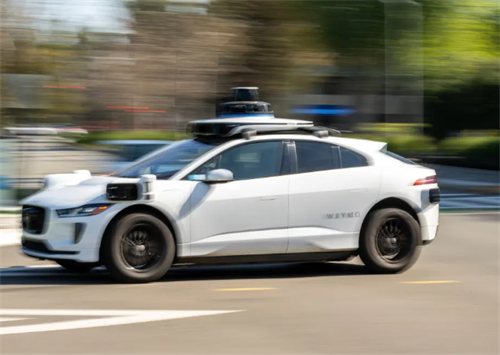
CNET Roadshow reported in March 2026 that Waymo had about 1,500 vehicles actually in service, with several hundred more testing or sitting in maintenance. The sixth-generation Driver has certainly lowered hardware costs, and the vehicle lineup has expanded from the Jaguar I-Pace to include the Zeekr RT and Hyundai Ioniq 5 (source: same CNET Roadshow article, March 31, 2026).
But production ramp-up has been slower than many expected.
A new 239,000-square-foot assembly plant in Phoenix is supposed to add another 2,000 vehicles (source: CNET Roadshow, March 31, 2026). When those will all hit the road, Waymo hasn't said.
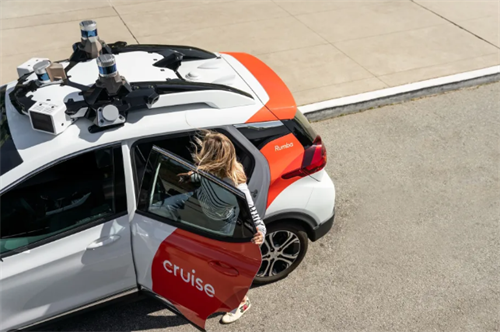
Cruise's $12.1 Billion Lesson
When thinking about Waymo's prospects, Cruise's exit is impossible to ignore.
GM officially shut down Cruise's robotaxi business in December 2024 and folded the team into its Super Cruise driver-assist division (source: NPR, “GM to Retreat from Robotaxis and Stop Funding Its Cruise Autonomous Vehicle Unit,” December 11, 2024). According to GM Authority's analysis of shareholder reports, the total poured into Cruise from the 2016 acquisition through early 2025 came to $12.1 billion (source: GM Authority, “GM's Cruise Investment Tops $12 Billion Through Early 2025,” March 3, 2025). That includes a $3.48 billion loss in 2023 alone.
People often blame one dramatic moment: the October 2023 crash in San Francisco where a Cruise vehicle struck a pedestrian and dragged her for 20 feet. The California DMV yanked its operating permit right after.
It was a serious failure, no question. But pinning everything on a single accident glosses over a deeper problem. The Verge reported in October 2024 that even with the fleet almost entirely grounded, Cruise still burned through $435 million that quarter (source: The Verge, “Cruise Lost $435 Million This Quarter, Even with Its Robotaxis on Hiatus,” October 22, 2024).
Software engineers, map maintenance, remote monitoring centers, insurance, legal teams—none of those costs vanish when the cars stop moving. GM CEO Mary Barra had once predicted Cruise would reach $1 billion in annual revenue by 2025 (source: GM 2022 Investor Day presentation, slide 15, November 17, 2022). Instead, cumulative revenue came in under $500 million while losses sailed past $10 billion (source: GM Authority, March 3, 2025).
The real lesson from Cruise isn't that autonomous driving is unsafe. It's that capital patience has a clock. When a parent company is staring down an EV transition and shareholder pressure, a subsidiary bleeding $2 billion a year with no visible path to profit is going to lose its lifeline.
The Math of Profitability
Now look at Waymo again. Annualized revenue of $355 million against a $126 billion valuation gives you a revenue multiple of roughly 355 times (calculated from Sacra revenue data, April 18, 2026, and TechCrunch valuation figure, February 2, 2026).
For context, Uber in its mature phase trades at five to ten times revenue. That gap leaves only two paths: exponential revenue growth or a drastic cost squeeze.
On revenue, Waymo's average fare sits at about $15 to $17, a touch below traditional ride-hailing (source: Sacra, April 18, 2026). If it genuinely hits 1 million rides a week by year-end, annualized revenue could approach $800 million at current prices. But that requires fleet size and per-vehicle utilization to rise together—and there's tension between the two. More cars tend to mean more empty miles and higher dispatch costs.
The cost side is even thornier. A Bank of America Global Research report published on November 5, 2025, titled “Robotaxi Economics: When Will the Math Work?”, ran the numbers: if a company owns its fleet, with a per-vehicle cost of $75,000, four-year depreciation, and 54,000 miles driven annually, the fare per mile needs to hit $1.95 to maintain a 10% margin. Drop the vehicle cost to $45,000 and the breakeven line falls to $1.53 per mile.
The problem is that Waymo's modified Jaguar I-Pace units cost a lot more than that. Even with fewer sensors on the sixth-generation Driver, the overall vehicle cost remains stubbornly high-end.
A reference point from China might help here. Pony.ai announced in March 2026 that its seventh-generation robotaxi reached monthly per-vehicle profitability in Shenzhen (source:Pony.ai press release, “Seventh-Generation Robotaxi Achieves Monthly Unit Profitability in Shenzhen,” March 12, 2026). The conditions: the bill-of-materials cost for the autonomous driving kit had dropped 70% from the prior generation, and the vehicle was designed for a lifespan of 600,000 kilometers.
Waymo's technical approach is different, but the case underlines the same truth. Profitability requires more than ride volume. It demands control over the full lifecycle cost of the vehicle.
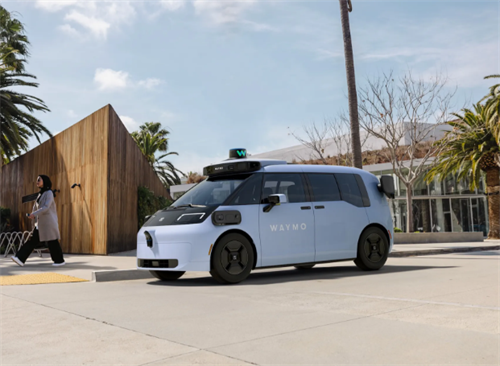
What You Face as a Rider Right Now
For the average passenger in 2026, robotaxis have moved from tech news to an actual mobility option you can touch. But the experience still comes with friction.
Price is the obvious starting point. Several industry estimates, including Sacra's April 18, 2026 pricing analysis, put Waymo's average fare in overlapping markets about 12% to 15% above Uber's, though the gap narrows on longer trips. Whether that premium is worth it for a daily commute depends entirely on how much you value a driverless cabin.
Then there's coverage. Waymo is now in ten metro areas, but service inside each city opens up gradually.
In Miami, it's limited to the Design District, Wynwood, Brickell and Coral Gables, with airport service still marked “coming soon” (source: Waymo service area map, accessed April 2026). In the Bay Area, SFO has been approved for operations, but actual routes from the airport to the city can still be constrained by live traffic conditions.
Scenario limitations matter too. Waymo already handles autonomous highway driving in Phoenix, Los Angeles and San Francisco, but performance in rough weather remains uneven. Before launching in Miami, the company ran dedicated rainy-season testing—an indirect admission that humidity and heavy rain still pose sensor challenges that aren't entirely solved (source: Waymo blog, “Bringing Waymo to Miami,” January 15, 2026).
And here's a small detail that says a lot: in Atlanta and Austin, you need to actively toggle on a “prioritize Waymo” option inside the Uber app. If you don't, the system defaults to a human driver. Robotaxis are still a supplement you have to choose consciously, not the default option.
The Underestimated Variable: Regulatory Friction
Tech circles talk endlessly about “crossing the chasm” from early adopters to the mass market. For robotaxis, it's less a single chasm and more a series of regulatory cliffs.
In February 2026, New York Governor Kathy Hochul pulled back a proposal that would have permitted robotaxis outside New York City (source: Reuters, “New York Governor Blocks Robotaxi Expansion Outside NYC,” February 14, 2026). That keeps Waymo's testing in the state limited to a human monitor behind the wheel—no paid rides allowed.
Around the same time, NHTSA opened an investigation into Waymo following a low-speed collision near a school in Santa Monica (source: NHTSA investigation PE26-003, opened February 8, 2026).
Neither event is catastrophic on its own, but together they point to something important. Regulatory tolerance doesn't automatically widen as the technology improves.
International expansion hides similar friction.
Testing in Tokyo means adapting to left-side driving and a dense maze of traffic signs. London brings historic street layouts and a brand-new set of UK autonomous driving laws (source: UK Automated Vehicles Act 2024, c. 10, effective May 20, 2025). Each market isn't a copy-paste of the American playbook; it's another learning curve entirely.
FAQ
Q1: Is Cruise still operating?
A: No. GM officially ended Cruise's robotaxi business in December 2024 (source: NPR, December 11, 2024). The technology team is now inside GM's Super Cruise division, working on driver-assist features for personal vehicles. Driverless taxi services are no longer offered.
Q2: How much more expensive is Waymo than Uber right now?
A: In overlapping markets, Waymo's average fare runs about 12% to 15% higher than Uber's, depending on the city and time (source: Sacra, April 18, 2026). The price gap tends to shrink on longer trips.
Q3: In which cities can I hail a Waymo?
A: As of April 2026, Waymo offers commercial service in ten US metro areas: San Francisco Bay Area, Los Angeles, Phoenix, Austin, Atlanta, Miami, Dallas, Houston, San Antonio, and Orlando. In Atlanta and Austin, you need to request a ride through the Uber app (source: CNET Roadshow, March 31, 2026).
Q4: When will robotaxis become profitable?
A: There's no clear timeline yet. Waymo's annualized revenue is around $355 million (source: Sacra, April 18, 2026), still far from covering R&D and operational costs. Most analysts do not expect broad profitability before 2028 at the earliest.
Q5: Who is responsible if there's an accident during my ride?
A: Currently, Waymo carries insurance liability as the operator. Passengers do not need separate coverage. However, state-level compensation rules are still evolving, so it's wise to keep an eye on local legislative updates.
References
[1] Korosec, K. (2026, February 2). Waymo raises $16B round to scale robotaxi fleet internationally. TechCrunch. https://techcrunch.com/2026/02/02/waymo-raises-16-billion-round-to-scale-robotaxi-fleet-london-tokyo/
[2] Hawkins, A. J. (2024, October 22). Cruise lost $435 million this quarter, even with its robotaxis on hiatus. The Verge. https://www.theverge.com/2024/10/22/24276670/cruise-gm-loss-q3-2024-driverless-robotaxi
[3] Sacra. (2026, April 18). Waymo revenue, funding & news. https://sacra.com/c/waymo/
[4] CNET Roadshow. (2026, March 31). Waymo Is Quickly Expanding to More Cities. Everything to Know About the Robotaxi. https://www.cnet.com/roadshow/news/waymo-robotaxis-everything-to-know/
[5] NPR. (2024, December 11). GM to retreat from robotaxis and stop funding its Cruise autonomous vehicle unit. https://www.npr.org/2024/12/11/g-s1-37700/gm-to-retreat-from-robotaxis-and-stop-funding-its-cruise-autonomous-vehicle-unit
About the Author:
James Caldwell is a veteran automotive technology reporter and former West Coast bureau chief for Road & Track. With 14 years of experience covering intelligent mobility and autonomous driving, he has closely tracked the commercialization of self-driving tech and regulatory changes, including on-the-ground reporting on Waymo's operations in Phoenix and Cruise's pilot program in San Francisco.
Disclaimer
This article is for informational purposes only and does not constitute investment advice or travel decision guidance. Autonomous driving technology and regulations evolve rapidly. For the latest on service availability, pricing, and safety data, please refer to official updates from Waymo, General Motors, and local regulatory bodies. The author has no commercial ties to any company mentioned.
Related Articles:
Why Autonomous Driving in Closed Environments — Like Mining Trucks and Port Vehicles — Turned Profitable Before Robotaxishttps://zhongtaiserver.zhongtongtec.com/storage/WebsiteAdmin/view/2026-04/autotriad.com/driving/why-autonomous-driving-in-closed-environments-like-mining-trucks-and-port-vehicles-turned-profitable-before-robotaxis.html
Recommended for you: