Why Autonomous Driving in Closed Environments — Like Mining Trucks and Port Vehicles — Turned Profitable Before Robotaxis
About the Author:Michael Brennan | Reading time: 10 minutes | Last updated: April 23, 2026
By 2026, the global autonomous driving industry presents a puzzling picture many struggle to make sense of. Waymo, according to its February 2, 2026 funding announcement, now provides 400,000 robotaxi rides per week across six major U.S. metro areas, racking up 15 million trips in 2025. Yet the company remains deeply unprofitable. Meanwhile, in the sparsely populated mining regions of Australia and at ports in New Zealand, a fleet of unglamorous autonomous vehicles has quietly started generating positive cash flow.
This is no accident. That autonomous driving in closed environments reached profitability first is not really about one company having better technology. It is a structural inevitability. The explanation falls into three clear categories: cost structure, business model quality, and the policy environment.
Cost Structure — Who’s Saving Money, and How Much?
Don’t Fixate on the Driver’s Salary Alone
The most natural starting point when discussing cost savings from autonomous driving is “eliminating the driver.” But looking only at driver wages badly distorts the picture. The cost structures in these two settings are fundamentally different.
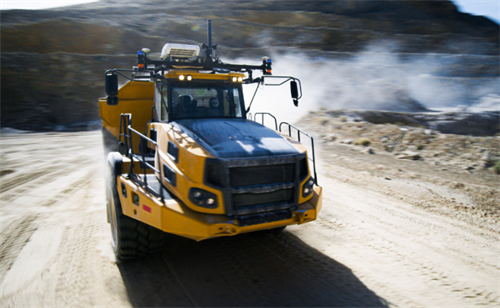
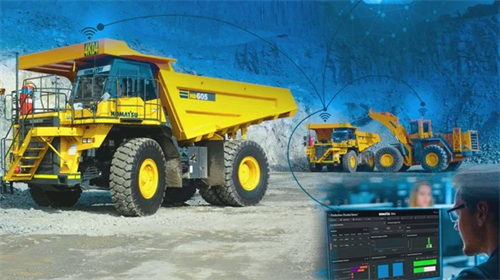
At a typical open-pit coal mine, each haul truck needs at least two drivers under a four-shift, three-crew rotation. According to the White Paper on Autonomous Driving Applications in Open-pit Coal Mines published by the China National Coal Association in December 2024, the annual labor cost per truck — covering wages, social insurance, and training — runs from roughly 500,000 to 600,000 RMB. Switching to autonomous operation wipes out nearly all of that labor expense. What replaces it is a fixed cost: a small remote monitoring team. Data disclosed in CiDi’s Hong Kong Stock Exchange prospectus shows the industry norm is now about one remote operator overseeing up to 100 autonomous haul trucks.
Less obvious are the indirect costs that also disappear. With human drivers, mine operators constantly pay a management premium for dealing with shift limits, driver fatigue, night-shift safety risks, and chronic labor shortages. Autonomous trucks make those problems vanish. Take EACON, for example. Under its “asset-light” ATaaS model — where the client buys or leases the trucks and EACON supplies the autonomous driving software plus operational support — the company’s updated 2026 HKEX prospectus shows this segment generated RMB 461 million in revenue during the first three quarters of 2025, up 267 percent year-over-year, and accounting for 50 percent of total revenue.
The port sector tells a similarly quantifiable story. According to a November 2024 interview with He Bei, CEO of Sinian Autonomous Driving, published by Chinese tech media outlet AI Emergence, Sinian has commercially deployed its L4 autonomous driving system at seven ports and three bulk cargo terminals, with the first batch of 122 mass-produced intelligent heavy-duty trucks delivered in July 2023. As He Bei put it, “Ports are an industry where digitalization has been implemented quite thoroughly. You only need autonomous driving to replace the manned horizontal transport segment.”
Robotaxis Cut the Driver — But the Bill Didn’t Go Away
Robotaxis eliminate the driver, too. But those driver savings are quickly eaten up by another set of bills.
Hardware is an unavoidable barrier. Waymo’s fifth-generation sensor suite originally carried a per-vehicle sensor cost of around $200,000, as detailed in a technical breakdown by Ars Technica in October 2023 and later confirmed in Morgan Stanley’s December 21, 2025 research report, Waymo Valuation Breakdown. Although the latest version has compressed sensor costs to roughly $12,700, total vehicle cost still lands in the $150,000 to $200,000 range. That’s a completely different asset class from the typical Uber vehicle.
Operating costs also weigh heavily. The same Morgan Stanley report estimates Waymo’s current per-mile operating cost at about $1.43. Analysts there note that by switching from the Jaguar I-PACE to lower-cost base vehicles from Zeekr and Hyundai, Waymo could gradually bring that figure down to $0.99–$1.08 per mile through 2026. But even if that target is met, the profit margin remains thin when measured against passenger prices of roughly $2.50–$3.00 per mile shown in U.S. Bureau of Labor Statistics rideshare data and Uber and Lyft’s average Q4 2025 pricing. On top of that, Waymo must still maintain a 24/7 remote support team, plus high-definition map maintenance and fleet management overhead, as outlined in its 2025 safety report filed with NHTSA.
So why can closed settings turn profitable first? Not because the autonomous driving technology there is more advanced. It’s because, in their cost structure, what gets removed — driver wages, management costs, accident costs — far outweighs what gets added — hardware, software, and remote monitoring. Robotaxi math, by contrast, shows a net saving that remains negative or barely breaks even.
Business Model Quality — B2B and B2C Are Two Different Games
Mining Companies Calculate ROI; Riders Remember Coupon Codes
Every customer in closed-environment autonomy is a business, and businesses make decisions based on one brutally simple metric: return on investment.
An economic assessment report on autonomous mining published by the China National Coal Association in 2024 shows that when a mining company’s CFO sees an autonomous haul truck solution paying for itself within 18 to 24 months, the resistance to signing a purchase order drops dramatically. Market data reinforces this. Frost & Sullivan’s China Autonomous Mining Industry Report from March 2025 estimates the Chinese autonomous mining solutions market at about RMB 5.1 billion in 2025, with a compound annual growth rate of 57.4 percent that could carry it to RMB 30.1 billion by 2030. That growth isn’t fuelled by subsidies — it comes from customers who have done the math and chosen to buy.
Robotaxis face individual consumers, a group highly sensitive to price — a two-dollar drop in a per-ride discount is enough to make them open the Uber app. A June 23, 2025 real-world test published by TechCrunch found that on trips of 4.3 to 9.3 kilometers, Lyft charged about $2.60 per kilometer, Uber about $2.90, and Waymo roughly $3.50. Waymo’s pricing was not meaningfully lower than its competitors; in many cases, it was higher.
From “Owning the Truck” to “Not Owning the Truck” — How Closed Settings Cracked the Profit Model
Over the past three years, mining autonomy has undergone a foundational shift in its business model, and understanding this shift is essential to grasping the profit story.
When the technology was still immature, autonomous driving companies had no choice but to use a “TaaS” (Transportation-as-a-Service) approach — buy the trucks yourself, build the fleet, run the haulage operations, all on your own balance sheet. This model helped gather data and validate system reliability quickly, but it demanded enormous capital spending, put constant pressure on cash flow, and dragged down asset returns.
As the technology matured, the industry widely pivoted to an “ATaaS” (Autonomous-Technology-as-a-Service) model. The client purchases or leases the trucks; the autonomous driving company supplies the software, the system, and the operational support, earning money from ongoing technical service fees. This turns the company from a heavy-asset hauler into a lightweight “AI driver” — providing the driving capability itself, not the vehicle.
EACON CEO Lin Qiao laid out this positioning at an industry forum in September 2024: “We position ourselves as a technology service provider… The client buys the truck; we provide the driving capability, and let this ‘driver’ grow from novice to veteran.” According to EACON’s HKEX prospectus, the number of active vehicles under the ATaaS model increased by 852 units in less than a year through September 2025, while the heavy-asset TaaS model added just 165 units over the same period.
The port sector has evolved similar business model variants. A Western Securities research report on port autonomy published in August 2025 calculates that under a direct-sales model, the expected net profit over the life cycle of a single autonomous port truck can reach 84 percent.
Robotaxis have yet to develop a business model capable of escaping the cycle of continuous cash burn. Alphabet’s Q1 2025 earnings, released on April 24, 2025, show its “Other Bets” segment recorded a net loss of roughly $1.2 billion in that quarter. Beyond Waymo, no robotaxi company globally has ever reported an operating profit for a single quarter.
The Policy Environment — Identical Technology, Radically Different Regulatory Pathways
Mines: Regulators Are Actively Pushing “Machines Replacing Humans”
The regulatory logic for closed settings can be summed up in a single sentence: The safety gains vastly outweigh the unknown risks.
A major mining accident brings not only the tragedy of lost life — it brings a staggering financial toll. A single serious incident can shut down a mine for months, costing hundreds of millions or even over a billion RMB. In China, the National Mine Safety Administration has explicitly called for large-scale deployment of autonomous haul trucks at open-pit mines. A joint directive from seven central government departments, referenced in NMSA Announcement No. 7 of 2025, mandates that by 2026 no less than 30 percent of dangerous and heavy-labor positions in coal mines must be replaced with intelligent equipment.
Policymakers are motivated by a simple logic: fewer people means fewer casualties. EACON’s 2025 ESG report summary notes that the company’s “Zhuoshan” autonomous driving system has achieved zero major accidents across six years of commercial operation. Moreover, because the site is physically closed and the routes are fixed, even if a system malfunction occurs, the impact is tightly contained by physical boundaries. The kind of legal and liability ambiguity that haunts open-road deployments simply doesn’t exist here.
Robotaxis: Regulators Are Still Testing the “Safety Perimeter”
The policy situation for robotaxis could hardly be more different, particularly in Western markets.
Take California. The state’s Department of Motor Vehicles launched a comprehensive revision of its autonomous vehicle regulations in 2025, as detailed in a regulatory proposal announcement published April 1, 2025. The public comment period ran from April to June, and public hearings must still be held before the new rules take effect. The proposal requires autonomous driving companies to progress through a three-stage permitting process — testing with a safety driver, testing without a safety driver, and fully driverless deployment — while imposing stricter data-reporting requirements and standards for interaction with emergency responders.
The deeper problem is the fragmentation of the regulatory framework. Individual U.S. states have wildly different attitudes toward autonomous driving. The McKinsey Center for Future Mobility estimated in a Q3 2025 industry report that entering a new city for commercial operations typically requires about two years and an upfront investment of $15 million to $30 million. Europe is even more complicated, with differences in driving habits and transport infrastructure across countries adding further technical adaptation challenges.
This isn’t just about legal text. By 2026, a clear regional divide had emerged: the McKinsey Future Mobility Survey 2025 and J.D. Power’s 2025 U.S. Autonomous Driving Confidence Index indicate that roughly 60 percent of Chinese consumers are open to robotaxis, compared with just 30 to 35 percent in developed Western markets. Public trust and policy together form a barrier that is, in many ways, harder to cross quickly than the technology itself.
What Does It Mean That Closed Settings Got Profitable First?
Closed-environment autonomy turning profitable first is not the end of the story. It simply reveals a deeper pattern: the sequence of autonomous driving commercialization success runs almost exactly from low environmental complexity to high.
But the real value in understanding this pattern is that it helps avoid misjudgment. Most current discussion about when robotaxis will become profitable assumes “once the technology is mature enough” is the only variable. That view systematically underestimates the costs created by business model challenges, operational efficiency hurdles, and regulatory fragmentation. Closed settings — mines, ports, airports — have already shown, with hard revenue figures and repeat customer rates, that a business loop can close. EACON’s 2026 HKEX prospectus update reports a customer retention rate of 100 percent.
These early profitability cases won’t automatically make robotaxis profitable. But the framework they offer tells us something important: instead of fixating on the day Waymo reaches an operating profit, we should first understand what the money those autonomous mining trucks are already making is actually built on.
FAQ
Q1: Have closed-environment autonomous driving companies all reached net profitability?
Not exactly. Although leading companies are seeing rapid revenue growth, “high revenue growth with ongoing net losses” is still the prevailing phase. EACON’s prospectus financials (updated through December 2025) show cumulative losses exceeding RMB 940 million from 2022 to 2024, driven mainly by high R&D spending and upfront costs for overseas market expansion. UISEE’s 2026 HKEX prospectus shows net losses totaling roughly RMB 655 million from 2023 to 2025, with R&D spending as a share of revenue falling from 114.3 percent to 71.2 percent — still elevated. The profit inflection point is getting closer, but it hasn’t arrived yet. Investors need to distinguish between “the business model is proven” and “net profit has turned positive.”
Q2: How can Western readers track autonomous driving opportunities in these closed settings?
Australia and the United States are the two core markets for global mining autonomy. GlobalData’s Mining Intelligence Center, as of March 2026, puts the worldwide fleet of operating autonomous haul trucks at roughly 2,080 units, with Australia leading at 927 units. Caterpillar’s 2025 annual report disclosed full-year revenue of $67.6 billion, a record high, with North America contributing nearly half. In its 2026 Investor Day presentation, Caterpillar set a target of tripling the number of commercially operational autonomous trucks by 2030 compared with 2024 levels. Komatsu’s FrontRunner system is also expanding. Elsewhere, the $2.8 billion, 360-unit electric autonomous mining truck project between Fortescue and Liebherr stands as the most significant clean-energy automation case to watch.
For ports, Rotterdam is among the most highly automated in the world. The Port of Rotterdam Authority’s 2026 digital infrastructure report and a September 2025 article in Autonomous Vehicle International indicate the port handles roughly 14.5 million TEUs annually, with an automation rate of about 95 percent and operating costs roughly 30 percent lower than a traditional port. The ports of Los Angeles and Long Beach are moving forward with automation pilots, though union resistance has kept overall U.S. port automation progress behind China and Europe. The trend is accelerating regardless.
Q3: If closed settings are easier to make profitable, why do most automakers and tech giants focus on robotaxis?
The target market size is completely different. Robotaxis are aimed at a global mobility market worth trillions of dollars. Mining autonomy’s addressable market outside China is projected at roughly $8.1 billion by 2030, per Frost & Sullivan. The port automation end-market, while growing steadily, is also smaller than urban mobility. The two tracks don’t conflict — in fact, some companies are already operating across multiple domains, growing through a “scene diffusion” mechanism.
Q4: Can the asset-light (ATaaS) model fully replace the asset-heavy model?
Not in the short term, and it arguably shouldn’t. The TaaS model still holds strategic value for rapid data collection and system validation. When technology was less mature, customers needed to see real, working operations before they would commit to an asset-light approach. The industry consensus is that ATaaS will increasingly dominate, but TaaS retains a legitimate role in new market entry — especially early-stage overseas expansion — and in technology validation scenarios.
Q5: Where can an ordinary car enthusiast or investor follow developments in closed-environment autonomy?
Good information sources include quarterly earnings calls and automation business disclosures from Caterpillar and Komatsu; automation project updates from global mining giants Rio Tinto, BHP, and Fortescue; and, on the port side, the Port of Rotterdam Authority’s website and developments at the U.S. ports of Long Beach and Los Angeles. SAE International’s annual Commercial Vehicle Autonomous Driving Technology Report remains an essential reference across the industry.
References
[1] QYResearch. (2026). Global Autonomous Mining Haul Trucks Market Research Report 2026-2032. Available at: https://www.qyresearch.com
[2] Research and Markets. (2026). Mining Truck Industry Report 2026-2035: A $42.14 Billion Market by 2030 with Caterpillar, Daimler, Volvo, Hyundai, PACCAR, Komatsu, Atlas Copco Leading. Dublin: GlobeNewsWire. Available at: https://www.globenewswire.com
[3] TechCrunch Mobility. (2026). Is $16B Enough to Build a Profitable Robotaxi Business? February 6. Available at: https://mobility.techcrunch.com
[4] 6Wresearch. (2025). North America Autonomous Mining Truck Market (2025-2031)*. Available at: https://www.6wresearch.com
[5] Transforma Insights. (2026). Autonomous Road Passenger Vehicles: A market inhibited by stringent regulations and expensive hardware. Research Report. Available at: https://transformainsights.com
About the Author
Michael Brennan is a Chicago-based automotive industry analyst with roughly 15 years of experience in commercial vehicle technology and automation. He previously worked in Caterpillar’s global mining equipment division and Volvo Group’s autonomous solutions unit, where he participated in early deployments of automation at open-pit mines and ports. Brennan holds a Master’s degree in Mechanical Engineering from the University of Illinois Urbana-Champaign. He is a long-standing member of SAE International and serves on its Commercial Vehicle Autonomous Technology Committee. Through his independent advisory firm, Autonomous Freight Advisory, he now provides feasibility analysis on autonomous driving commercialization to mining companies, port operators, and investors. He has published nearly 40 industry analyses in outlets such as Automotive World and Mining Magazine. The views expressed here are his ow
Disclaimer
This article is for informational and educational purposes only and does not constitute investment advice, business decision advice, or legal advice of any kind. Market data, financial figures, and industry analysis cited herein come from third-party research organizations and publicly disclosed corporate information. The author has made every effort to ensure accuracy but makes no guarantee as to the completeness, timeliness, or absolute precision of the data. Stock markets involve inherent risk; past performance is not indicative of future results. The author and publishing platform accept no liability for any investment or business decisions made based on this content. Specific companies mentioned — including but not limited to EACON, UISEE, Sinian Autonomous Driving, Waymo, Caterpillar, and Komatsu — are used solely as industry case studies for analysis and illustration, and their mention does not constitute a recommendation or endorsement of any stock, security, or product. For professional investment advice, please consult a licensed financial advisor.
Related Articles
1. Robotaxis, Autonomous Delivery, and Driverless Mining Trucks: Which One Makes Money First?https://zhongtaiserver.zhongtongtec.com/storage/WebsiteAdmin/view/2026-04/autotriad.com/driving/robotaxis-autonomous-delivery-and-driverless-mining-trucks-which-one-makes-money-first.html
2. Waymo and Cruise Keep Expanding Robotaxi Networks. How Far Are We from Profitability?https://zhongtaiserver.zhongtongtec.com/storage/WebsiteAdmin/view/2026-04/autotriad.com/driving/waymo-and-cruise-keep-expanding-robotaxi-networks-how-far-are-we-from-profitability.html
Recommended for you: