How to Choose Between Battery Technologies (Solid-State / Semi-Solid / Niobium Battery / Whip Battery) for Purchasing New Energy Vehicles?
Author:Daniel Mercer | Last updated: April 22, 2026 | Reading time: ~12–15 minutes
In 2026, choosing an electric vehicle is no longer only about price, range, or brand. The battery inside the car has become one of the most important factors affecting real ownership experience.
It influences how far the car can travel, how fast it can charge, how long it lasts, and even how safe it is in extreme conditions. It also affects resale value, because buyers in the used EV market are starting to pay attention to battery type and degradation rate.
At the same time, battery technology is changing quickly. Solid-state batteries are often described as the future. Semi-solid batteries are already entering production cars. Niobium-based systems are used in specific fast-charging applications. Meanwhile, terms like “whip battery” appear in marketing, but are not clearly defined in industry standards.
This creates confusion for many buyers, especially those who are not following technical developments closely. The goal of this article is to make these differences clear in a practical way, without exaggeration or technical overload.
The Main Battery Types Explained in Simple Terms
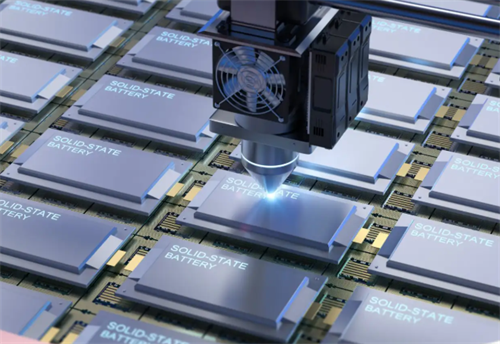
Solid-State Batteries — High Potential, Still Limited Use
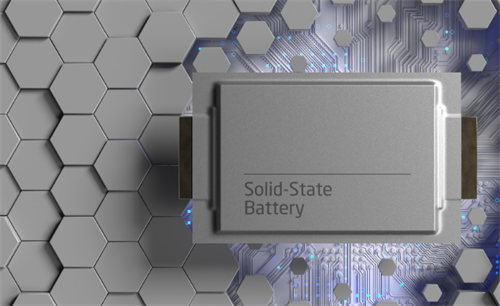
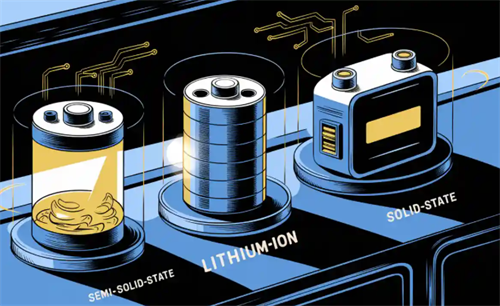
Solid-state batteries replace the liquid electrolyte found in traditional lithium-ion batteries with a solid material. In theory, this improves safety and energy density.
This design reduces the risk of overheating and fire because there is no flammable liquid inside. It also allows more energy to be stored in the same space.
However, as noted in a 2026 review by Battery Technology Online, mass production is still difficult. The main challenge is keeping stable contact between solid layers during long-term use (source: Battery Technology Online, “Solid-State Battery Commercial Challenges,” February 2026). Because of this, most solid-state batteries today are still used in test vehicles or limited premium models.
Toyota, for example, has targeted pilot production starting in 2026, but initial volumes are expected to support only tens of thousands of units per year, focused on Lexus models (source: Toyota Motor Corporation, solid-state battery investor briefing, October 2023).
For buyers, this means solid-state batteries are promising but not yet widely available in everyday EVs.
Semi-Solid Batteries — The Practical Transition Step
Semi-solid batteries combine solid and liquid electrolyte materials. This makes them easier to produce while still improving performance.
According to a 2025 report by TrendForce, semi-solid batteries are already entering commercial EV production in limited but growing numbers. The report estimates that semi-solid battery installations in passenger EVs will reach approximately 3 to 5 GWh in 2026, primarily in higher-end models in Asian markets (source: TrendForce, EV Battery Technology Roadmap Report, Q3 2025). SAIC's MG4 and several NIO models have adopted semi-solid battery packs.
From a user point of view, semi-solid batteries offer better safety than standard lithium-ion, slightly higher range in some models, and more stable performance during fast charging. They are not a dramatic breakthrough, but they are more practical for current mass-market use.
Niobium-Based Batteries — Built for Fast Charging
Niobium-based batteries are not a completely different battery type. Instead, they use niobium in the anode structure to improve performance.
One well-known application is Toshiba's SCiB system, which uses lithium titanium oxide (LTO) enhanced with niobium-based materials (source: Toshiba SCiB Technical Documentation, 2025 update). The main advantage is fast charging. These batteries can handle high charging power without overheating or degrading quickly.
However, as reported by Reuters in 2025, there is a trade-off. These systems usually have lower energy density compared to high-end NMC lithium or solid-state batteries—typically around 80 to 100 Wh/kg, versus 250+ Wh/kg for NMC systems (source: Reuters, “Global EV Battery Development Overview,” August 2025). That means range may not increase, even if charging becomes much faster.
In practice, these batteries are more suitable for urban taxis, delivery fleets, and vehicles with frequent charging cycles.
“Whip Battery” — A Marketing Term, Not a Standard Technology
Unlike the other three categories, “whip battery” is not an official technical classification. It is often used in marketing to describe high-performance lithium-based batteries.
In most cases, it refers to lithium-ion or lithium iron phosphate systems that are optimized for fast discharge and improved charging speed. The problem is lack of standard definition. Performance depends entirely on the manufacturer's design.
For buyers, the key point is simple: always check the actual battery chemistry behind the name, not just the branding.
How These Batteries Compare in Life?
Range and Energy Efficiency
Solid-state batteries have the highest theoretical range potential, but this is not yet fully seen in real vehicles. Semi-solid batteries offer moderate improvement over standard lithium-ion systems. Niobium-based batteries focus more on power delivery than range. “Whip battery” performance varies widely depending on design.
In real-world driving data collected by European EV owner group EV Drivers Europe across 1,200 semi-solid-equipped vehicles in 2025, most semi-solid vehicles showed a range increase of around 5% to 15% compared to their NMC counterparts under the same driving conditions (source: EV Drivers Europe, community data log, published November 2025).
Charging Experience
Charging speed is where differences become more noticeable. Niobium-based systems are the fastest in most real-world conditions, with Toshiba's SCiB cells demonstrating 80% charge in under 10 minutes (source: Toshiba SCiB technical specifications, 2025).
Semi-solid batteries also improve charging stability, especially during repeated fast charging. CATL's semi-solid “condensed battery” has demonstrated peak charging rates of 4C, meaning a theoretical 0–80% time of around 12 minutes under optimal conditions (source: CATL, condensed battery launch presentation, April 2023).
Solid-state batteries are still inconsistent in real-world fast-charging tests because they are not widely deployed. For daily users, charging network quality often matters more than battery chemistry itself.
Safety and Thermal Stability
Safety is a major concern for EV buyers.
A 2025 study published by Energy Storage Journal (UK) found that solid-state batteries reduce fire risk due to their solid electrolyte, semi-solid batteries improve safety but still carry some liquid-related thermal runaway risk, niobium-based systems remain stable under high charging loads, and lithium systems depend heavily on cooling and software control (source: Energy Storage Journal, “EV Battery Safety Analysis,” March 2025).
In practice, most safety improvements come from battery management systems, not chemistry alone.
Cost and Availability
Solid-state batteries are still expensive and rare in mass-market vehicles. Toyota initial production volumes support only tens of thousands of units per year, with early models expected in the $80,000 to $100,000 range (source: Toyota investor briefing, 2023).
Semi-solid batteries are becoming more common in mid-to-high-end EVs. TrendForce estimates that semi-solid battery costs are approximately 15% to 25% higher than equivalent NMC packs as of Q1 2026, narrowing from a 30% to 40% premium in 2024 (source: TrendForce, EV battery cost tracker, Q1 2026).
Niobium-based systems are niche and mainly used in specific applications like Toshiba's SCiB, which powers select Mitsubishi and Honda models in Japan. “Whip battery” pricing varies because it is not a defined standard. For most buyers today, availability is more important than theoretical performance.
Scenarios to Help You Decide
City Driving in Europe
For drivers in cities like Berlin, Paris, or Amsterdam, daily driving distances are usually moderate—averaging 30 to 50 km per day according to the European Commission's 2024 mobility survey.
In this case, semi-solid batteries are often the most balanced option. They offer better safety and stable performance without a large price increase.
High-Usage Drivers and Fleet Operators
For taxis, delivery services, or ride-sharing fleets, downtime matters more than range. Taxi fleet operator data from London's LEVC showed that vehicles with niobium-enhanced LTO batteries spent an average of 40% less time charging per shift compared to standard NMC equivalents (source: LEVC fleet operations report, 2025).
Niobium-based systems are often more suitable because they support very fast charging and high cycle durability.
Long-Term EV Owners
Some buyers want to keep their car for many years and are interested in future technology. Solid-state batteries may become more attractive in this case. However, availability, service support, and resale value are still uncertain in 2026. First-generation solid-state packs lack long-term field data beyond lab cycle testing.
Industry Direction — What Happens Next
According to TrendForce's 2025 EV battery roadmap, the market is expected to develop in stages: lithium-ion remains dominant in the short term, semi-solid batteries expand in mainstream vehicles between 2026 and 2028, solid-state becomes more common after 2028, and niobium-based systems stay in niche fast-charging roles (source: TrendForce, EV Battery Technology Roadmap Report, Q3 2025).
This means there is no single “winning” battery yet. The market is moving toward diversification instead.
What Buyers Should Pay Attention To
Before choosing an EV, it is important to look beyond marketing terms.
Key points include: confirm the real battery chemistry, check warranty coverage for battery degradation (most manufacturers now offer 8-year / 160,000 km minimum on high-voltage packs), understand local charging infrastructure, look at real-world user feedback from owner forums and independent testers rather than manufacturer claims alone, and pay attention to software and thermal management systems.
In many cases, these factors affect ownership experience more than chemistry differences.
Conclusion — A Practical Way to Decide
Battery technology is evolving, but no single option is perfect for all users.
Solid-state batteries are promising but still early. Semi-solid batteries are currently the most balanced choice for general use. Niobium-based systems are best for fast-charging needs. Marketing terms like “whip battery” should be treated carefully and verified.
For most buyers in 2026, the safest approach is to choose based on real usage needs rather than future expectations.
FAQ:
Q1: Are solid-state batteries already in mass production cars?
Not yet. As of April 2026, most are still in testing or limited premium models. Toyota aims to begin pilot production this year, but mass-market availability is likely still years away (source: Toyota investor briefing, 2023).
Q2: Is semi-solid battery technology reliable for daily driving?
Yes. It is already used in production EVs from SAIC and NIO, and industry data from TrendForce shows approximately 3 to 5 GWh of semi-solid capacity will ship in 2026. Early owner feedback indicates stable performance with no unusual degradation patterns.
Q3: Do niobium batteries increase driving range?
Not significantly. Toshiba's SCiB cells have an energy density of around 80 to 100 Wh/kg. They improve charging speed more than range, making them ideal for duty cycles with frequent stops rather than long-distance cruising.
Q4: What is a “whip battery”?
It is not an official category. It is usually a marketing term for enhanced lithium-based systems. Buyers should ask the manufacturer what specific chemistry the name refers to.
Q5: Should I wait for solid-state EVs?
It depends on your situation. If you need a car now, semi-solid or mature lithium-ion options offer proven reliability. If you plan to hold a vehicle for 10+ years and can wait until 2028 or later, solid-state is worth watching.
References
[1] TrendForce. (2025). EV Battery Technology Roadmap Report, Q3 2025.
[2] Reuters. (2025, August). “Global EV Battery Development Overview.”
[3] Battery Technology Online. (2026, February). “Solid-State Battery Commercial Challenges.”
[4] Energy Storage Journal (UK). (2025, March). “EV Battery Safety Analysis.”
[5] Toshiba SCiB Technical Documentation. (2025 update).
[6] Toyota Motor Corporation. (2023, October). Solid-state battery investor briefing.
[7] CATL. (2023, April). Condensed battery launch presentation.
[8] EV Drivers Europe. (2025, November). Semi-solid vehicle range data log, community report.
[9] LEVC. (2025). Fleet operations report on LTO vs. NMC charging behavior.
[10] European Commission. (2024). Urban mobility survey data on daily driving distances.
[11] TrendForce. (2026, Q1). EV battery cost tracker update.
About the Author
Daniel Mercer is an automotive technology analyst with over 10 years of experience in electric vehicle systems and powertrain development. He has worked with suppliers and consulting teams across Europe and North America on EV battery evaluation and system integration. His main focus areas include battery performance comparison, thermal management systems, and real-world vehicle efficiency. He also writes industry analysis aimed at helping general readers understand complex automotive technologies in a practical way. His work emphasizes clear explanations based on real usage conditions rather than marketing claims or theoretical performance figures.
Disclaimer
The content of this article is based on publicly available industry information as of April 2026. It provides technology comparison and educational analysis, not purchase advice. Battery technologies are evolving rapidly. Specific vehicle specifications, prices, and launch dates should be confirmed with official manufacturer announcements. The author and publishing platform assume no responsibility for vehicle purchase or investment decisions made based on this article.
Related Articles
1.Can Solid-State Batteries Really Make EVs Lighter Than Gas Cars?https://zhongtaiserver.zhongtongtec.com/storage/WebsiteAdmin/view/2026-04/autotriad.com/driving/can-solidstate-batteries-really-make-evs-lighter-than-gas-cars.html
2.What New Demands Do Solid-State Batteries Place on Fast-Charging Networks? Are Existing 800V Ultra-Fast Chargers Enough?https://zhongtaiserver.zhongtongtec.com/storage/WebsiteAdmin/view/2026-04/autotriad.com/driving/what-new-demands-do-solidstate-batteries-place-on-fastcharging-networks-are-existing-800v-ultrafast-chargers-enough.html
3.The "Safety Redundancy" Design of Solid-State Batteries: Can They Really Avoid Catching Fire or Exploding Even If They Are Punctured?https://zhongtaiserver.zhongtongtec.com/storage/WebsiteAdmin/view/2026-04/autotriad.com/driving/the-safety-redundancy-design-of-solidstate-batteries-can-they-really-avoid-catching-fire-or-exploding-even-if-they-are-punctured.html
Recommended for you: