Can I Upgrade My EV to a Solid-State Battery Later?
Author: Mark Stevenson | Last updated: April 22, 2026 | Reading time: About 9 minutes
If you're thinking about buying an electric vehicle with a solid-state battery, or you've already put down a deposit on a model coming out next year, there's one question that's probably been nagging at you: five years from now, when newer battery technology hits the market, can I just swap out the battery pack, or do I have to sell the whole car?
It's a practical question. After all, a third to half of an EV's price tag goes to the battery. If technology moves as fast as smartphone chips, nobody wants to buy a new car every three years.
But the reality is likely more complicated than the simple idea of "swapping a battery."
Why "Upgrading the Battery" Sounds Easy but Isn't
First, let's clear up a common misconception: solid-state batteries and today's lithium-ion batteries aren't just "different materials inside." They work differently, need different cooling, and even come in different physical sizes.
Take Toyota's solid-state battery roadmap as an example. The company announced in 2023 that it would launch a production vehicle with solid-state batteries by 2027, but industry watchers widely expect this timeline to slip to 2028–2030.
According to a Jalopnik report from April 2026, the core challenges facing solid-state batteries include mismatched thermal expansion coefficients, interface stability between the solid electrolyte and electrodes, and yield rates during large-scale manufacturing (source: Jalopnik, "What Are The Biggest Challenges With Making The Switch To Solid-State Batteries?" April 2026). These aren't problems you fix with a quick patch.
More importantly, modern EV battery packs stopped being standalone parts you could slide out like a phone battery a long time ago.
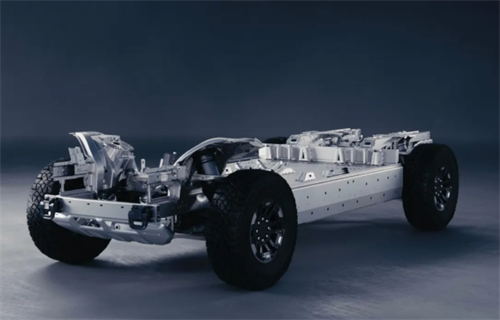
From Tesla's structural battery pack to BYD's Cell-to-Body (CTB) technology, the battery pack is literally part of the car's body. It helps absorb crash forces, affects the center of gravity, and even determines the vehicle's torsional stiffness.
An analysis by Mobility News UK in March 2026 pointed out clearly that retrofitting solid-state batteries into existing EVs would require redoing the entire vehicle crash safety certification—a process so costly and time-consuming that manufacturers often decide it's easier to just build a new car (source: Mobility News UK, "Are Solid-State Battery Retrofits Realistic for Extending the Life of Existing EV Fleets?" March 2026).
Here's a detail worth noting: in 2024, QuantumScape, a German solid-state battery startup, demonstrated prototype batteries charging to 80% in 15 minutes in a lab setting (source: QuantumScape press release, "QSE-5 B-Sample Results," 2024).
But between lab data and mass production lies something called "engineering." Mass production means thousands of cells performing identically, reliability in extreme temperatures, and cycle life spanning more than a decade. No supplier has yet published complete, verified test data covering all these metrics.
The Silent Signal from Automakers
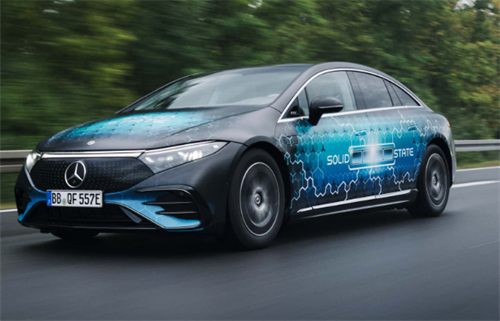
If you read the fine print in automakers' solid-state battery announcements, you'll notice an interesting pattern: they all emphasize that "next-generation models will be the first to feature" the technology, but almost none mention "existing owners can upgrade."
This isn't an oversight. It's business reality.
When BMW announced its partnership with Solid Power in 2025 to develop solid-state batteries, it explicitly tied the technology to its "Neue Klasse" platform—a completely new chassis architecture incompatible with current i4 and iX models (source: BMW Group press release, "BMW and Solid Power Deepen Partnership," 2025). Ford, despite investing in Solid Power, has consistently framed its efforts around "supply chain security for future models," not retrofit programs (source: Ford Motor Company investor presentation, Q4 2025).
This silence is an answer in itself. Automakers' core business is selling new cars, not extending the life of old ones. If upgrading battery packs made economic sense, they'd be promoting it as aggressively as they push autonomous driving software subscriptions.
But there is one exception worth watching: commercial vehicle fleets.
Commercial Fleets Might Be the First to Test the Waters
Unlike private cars, electric buses and delivery trucks operate in standardized conditions with centralized maintenance.
According to Mobility News UK's March 2026 reporting, some European bus operators are currently negotiating with OEMs to include "battery technology upgrade clauses" in their purchase contracts (source: Mobility News UK, March 2026). The logic here is total cost of ownership (TCO)—an electric bus stays in service for 12 to 15 years, and battery technology will almost certainly evolve during that lifespan.
More importantly, commercial vehicle battery packs tend to retain higher modularity in their design. Not because the technology is more advanced, but because fleet operators need to swap out faulty modules quickly to minimize downtime. This design "conservatism" ironically leaves a small opening for future technology upgrades.
However, even in this sector, there are no publicly confirmed success stories yet. Negotiations are ongoing, supply chains are still being built, and solid-state batteries currently cost two to three times as much as lithium-ion batteries—a figure published in Market Report Analytics' 2025 industry report (source: Market Report Analytics, "Consumer-Centric Trends in Automotive All-Solid-State Battery Industry," 2025). Until that cost curve comes down, no operator wants to be the first guinea pig.
Battery Swapping: A Theoretical Exit, a Practical Bottleneck
When people talk about battery upgrades, many think of NIO's battery swapping model. If the battery doesn't belong to the owner but to the swapping network, the burden of technology upgrades shifts to the operator.
The logic sounds perfect, but there's an overlooked economic problem: the initial purchase cost of solid-state batteries is extremely high.
According to Market Report Analytics' 2025 projections, even by 2030, when the global solid-state battery market may expand at a 50% compound annual growth rate, early production capacity will still prioritize premium passenger cars over swapping networks (source: Market Report Analytics, 2025).
This means swapping operators face a dilemma: either continue providing lithium-ion batteries to existing users, or invest heavily to replace the entire battery inventory across their swapping stations. Under pressure to deliver capital returns, the former is almost certainly the choice.
So while Battery-as-a-Service (BaaS) solves the problem of "battery degradation," it doesn't solve the problem of "generational technology upgrades."
A more realistic future scenario: swapping stations might stock two types of batteries—older lithium-ion and newer solid-state. But this creates a standardization nightmare. Different battery chemistries require different battery management systems (BMS) and thermal management strategies, multiplying the hardware complexity of swapping stations.
The Aftermarket: It Exists, but It's Not Worth the Risk
Search "EV battery swap" on YouTube and you'll find plenty of DIY conversion cases. Someone swapped a Tesla battery module into an old Nissan Leaf. Someone converted a Toyota Prius nickel-metal hydride pack to lithium-ion. These videos get millions of views because they tap into our simple hope of "fixing it and keeping it running."
But solid-state battery conversion is an entirely different league.
First, solid-state batteries operate at different voltages and internal resistances than lithium-ion batteries, meaning the vehicle's entire BMS needs to be rewritten from scratch. This isn't just a software flash—it involves reworking high-voltage safety strategies, charging protocols, and thermal management logic.
Jalopnik's April 2026 reporting emphasized that solid electrolytes are more temperature-sensitive than liquid ones, with lower heat dissipation efficiency (source: Jalopnik, April 2026). Existing EV cooling loops may not be up to the task.
Second, and most critically: once you modify the battery, the factory warranty is immediately void, and insurance coverage may evaporate. In the United States, most auto insurance policies explicitly exclude accident coverage for "unauthorized modifications to high-voltage systems." If you crash a car with a converted solid-state battery, the insurer has every reason to deny your claim.
In 2024, Florida saw a modified EV fire incident where, although the vehicle was converted with lithium-ion batteries, the insurance company denied the claim on grounds of "unauthorized high-voltage system modification" (source: National Fire Protection Association EV fire incident report, 2024; Florida Department of Insurance Regulation claim ruling, docket #24-01872). This precedent is a clear warning to anyone considering solid-state battery conversions.
So What Should Regular Car Owners Actually Do?
If you're holding a reservation for a solid-state battery vehicle, or still on the fence, here are three practical pieces of advice.
First, remove "upgradability" from your decision factors.
Buy an EV the same way you buy a gasoline car—based on whether current technology meets your needs, not on gambling what you might upgrade in the future. If your daily commute is 30 miles with occasional weekend road trips, a 300-mile range EV is already plenty. Even if solid-state batteries become common in five years, your driving pattern won't have changed. Your motivation to switch cars won't come from range anxiety, but from other factors like smart features or comfort.
Second, if upgrading really matters to you, watch for official OEM announcements, not supply chain news.
Toyota, BMW, and Ford are pouring billions into solid-state batteries, but that investment doesn't mean your car can be upgraded. The signal that actually matters is whether an OEM has publicly announced a "battery refresh program" or "official upgrade path." As of April 2026, no such signals have appeared.
Third, for commercial fleet buyers, put battery upgrade clauses in your purchase contracts.
While these negotiations are still in early stages, as a buyer you have the right to demand clear commitments from suppliers about technology evolution. Even if the upgrades never materialize, having upgrade clauses in the contract can convert into price discounts or service credits down the line.
FAQ
Q1: Can I take my solid-state battery car to a repair shop after five years and swap in a new solid-state battery?
A: No. There are currently no generic solid-state battery replacement parts, and battery packs are deeply integrated with the vehicle structure. For the next five years, official channels are the only possible path, but no OEM has announced such a program.
Q2: Can existing lithium-ion EVs be converted to solid-state batteries?
A: Technically extremely difficult, economically not viable. Conversion involves restructuring the vehicle, rewriting the BMS, redesigning thermal management, and redoing safety certification. Costs could exceed the vehicle's residual value, and you'd lose warranty and insurance coverage.
Q3: Will solid-state batteries double my range?
A: Next-generation solid-state vehicles may achieve 600+ miles of range, but this results from complete vehicle redesign, not simply swapping the battery pack.
Q4: Does Battery-as-a-Service (BaaS) solve the upgrade problem?
A: Theoretically yes, but in practice operators face the high procurement cost of solid-state batteries. They are more likely to adopt a "mixed old and new" strategy than a full fleet upgrade.
Q5: Are solid-state battery production timelines reliable?
A: Industry consensus targets 2027–2030 for scaled production, but timelines have slipped repeatedly in the past. Rely on official OEM delivery announcements rather than press conference promises.
References
[1] Mobility News UK. "Are solid-state battery retrofits realistic for extending the life of existing EV fleets?" March 2026.
[2] Jalopnik. "What Are The Biggest Challenges With Making The Switch To Solid-State Batteries?" April 2026.
[3] Market Report Analytics. "Consumer-Centric Trends in Automotive All-Solid-State Battery Industry." 2025.
[4] MDPI Batteries. "Challenges and Advancements in All-Solid-State Battery Technology for Electric Vehicles." 2024.
[5] Battery Power Tips. "What Are the Main Challenges in Developing Solid-State Batteries for EVs?" 2024.
Disclaimer
This article does not constitute vehicle purchase or investment advice. Solid-state battery technology is evolving rapidly, and specific product specifications and timelines may change. Readers should consult directly with automakers or authorized dealers for the most current information before making major purchasing decisions.
Author credentials:
Mark Stevenson,Former Ford Motor Company battery engineering consultant, 15 years of experience in new energy vehicle powertrain development, SAE International member.
Related Articles
1. Solid-State Battery Era Arrives — Will My Electric Vehicle Retain Its Value?https://zhongtaiserver.zhongtongtec.com/storage/WebsiteAdmin/view/2026-04/autotriad.com/driving/solidstate-battery-era-arrives-will-my-electric-vehicle-retain-its-value.html
2. Can Solid-State Batteries Really Make EVs Lighter Than Gas Cars?https://zhongtaiserver.zhongtongtec.com/storage/WebsiteAdmin/view/2026-04/autotriad.com/driving/can-solidstate-batteries-really-make-evs-lighter-than-gas-cars.html
Recommended for you: